




Tinubu Targets 50% Reduction in Out-of-School Children by 2031

INTRO – Tinubu Targets 50% Reduction in Nigeria’s Out-of-School Children by 2031, Promises 20,000 New Teachers
President Bola Ahmed Tinubu has pledged to reduce Nigeria’s out-of-school population by 50 per cent by 2031 and recruit and train an additional 20,000 teachers under the All Progressives Congress (APC)’s proposed 2027–2031 development agenda.
The commitments are contained in the APC manifesto titled From Reforms to Prosperity, presented in Abuja on November 10, 2026.
The education proposals seek to address some of Nigeria’s persistent challenges, including limited access to classrooms, teacher shortages, school insecurity and poor learning outcomes.
Under the plan, the administration intends to expand the HOPE-EDU programme nationwide, strengthen existing education initiatives and introduce an annual dashboard to monitor school enrolment, dropout rates and completion figures.
However, questions remain about the baseline figures that will be used to measure the proposed reduction and how the government intends to achieve the target across the country’s 36 states and the Federal Capital Territory.
Government plans to recruit 20,000 additional teachers
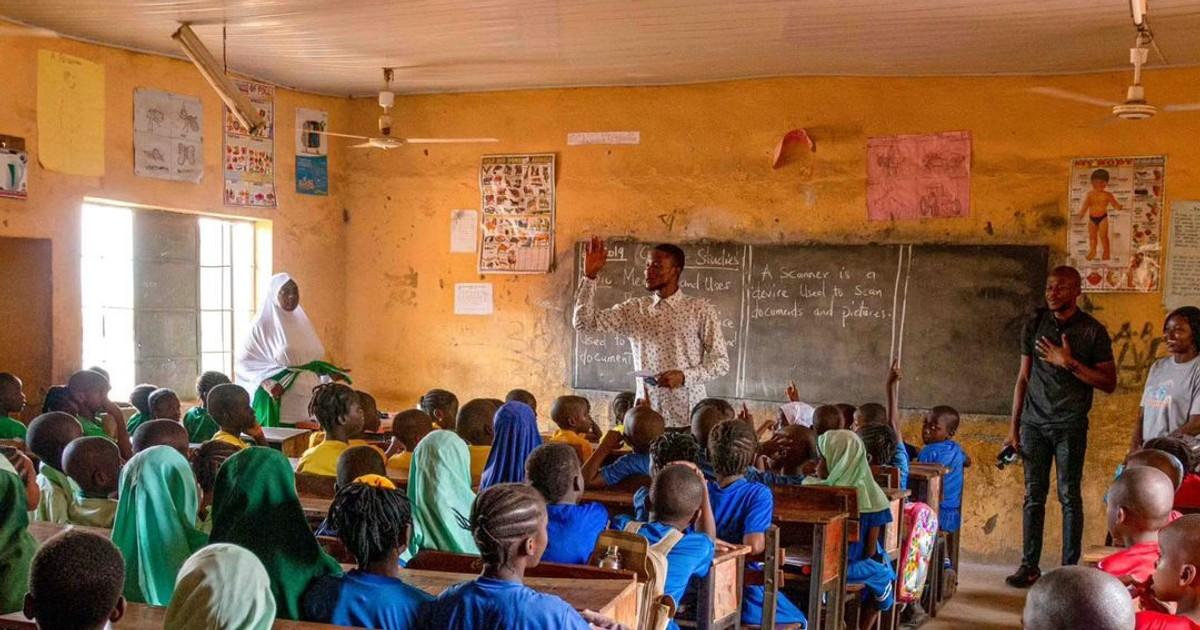
The manifesto proposes recruiting and training 20,000 additional teachers, building on the 80,284 teachers the document says have already been certified and licensed.
The proposed recruitment will prioritise female teachers and educators in underserved rural communities, where access to qualified teaching personnel remains a major challenge.
The administration also intends to strengthen teacher development and improve school facilities as part of efforts to make education more accessible and effective.
Beyond recruitment, the manifesto promises stricter enforcement of safe-school standards and improved access to water and sanitation facilities in educational institutions.
These measures are particularly important in communities where inadequate infrastructure and insecurity discourage parents from sending their children to school.
Nigeria’s out-of-school crisis remains a major concern
Nigeria continues to face one of the world’s largest out-of-school education challenges.
UNICEF’s 2024 Situation Analysis of Children and Adolescents in Nigeria reported that 10.2 million primary-school-age children and 8.1 million junior secondary-school-age children were out of school, using figures attributed to the Universal Basic Education Commission.
The report also cited different estimates from the 2021 Multiple Indicator Cluster Survey, illustrating why establishing a consistent and up-to-date national baseline is important.
In April 2026, Education Minister Tunji Alausa was also reported to have put the country’s out-of-school population at approximately 15 million.
These figures come from different reporting periods and measurement sources, so they should not be treated as directly interchangeable.
For the proposed 50 per cent reduction to be properly assessed, the government will need to publish the baseline it intends to use and explain how it will count children entering and leaving the education system.
Without that information, Nigerians may find it difficult to determine whether the 2031 target is being achieved.
Learning outcomes remain another challenge
Getting children into classrooms is only one part of Nigeria’s education problem. Ensuring that they acquire basic reading, writing and mathematics skills is equally important.
UNICEF’s 2024 education findings highlighted serious weaknesses in foundational learning among Nigerian children.
Its reporting indicated that approximately 74 per cent of children aged seven to 14 lacked basic reading and mathematics skills, underlining the difference between school attendance and actual learning.
The APC manifesto recognises the importance of improving learning quality. It proposes prioritising foundational education, science, technology, engineering, mathematics and digital capabilities across educational levels.
It also promises stronger partnerships with industries to provide practical training and connect education with employment opportunities.
The government will need to show that improvements in enrolment are accompanied by better teaching, learning materials, qualified personnel and measurable academic progress.
HOPE-EDU and girls’ education programmes
The manifesto proposes expanding the HOPE-EDU programme nationwide as a major part of the strategy to reduce the number of children excluded from formal education.
It also promises to extend the Adolescent Girls Initiative for Learning and Empowerment (AGILE), which the document says currently operates in 18 states, to additional states with high numbers of girls out of school.
Another proposed intervention is the creation of dedicated pathways that would allow teenage mothers to return to school and continue their education.
These commitments are intended to address some of the economic and social barriers that prevent children, particularly girls, from completing their education.
The manifesto reports that 3.7 million girls have been enrolled in secondary schools across 18 states through AGILE.
It also claims that more than 10,000 schools have been rehabilitated, approximately 978,000 teachers have received training and 10,000 classrooms have been renovated.
These are figures presented by the government in its manifesto and should be assessed through independent monitoring and publicly available programme data.
Funding and insecurity could affect the 2031 target
The proposed education targets will require sustained funding, effective implementation and cooperation between federal, state and local governments.
Nigeria’s education challenges are not limited to teacher shortages. Poverty, displacement, insecurity, inadequate school infrastructure and the cost of keeping children in school also affect attendance.
A UNICEF report published in September 2026 on public financing for basic education highlighted the country’s longstanding funding difficulties.
It reported that government education expenditure as a share of total spending declined from 9.3 per cent in 2015 to 3.6 per cent in 2023, below the international benchmark of 15 to 20 per cent.
The report also highlighted poor learning outcomes among children already enrolled in school.
These issues mean that recruiting additional teachers alone will not be sufficient to achieve the proposed reduction.
Schools need reliable funding, classrooms, learning materials, safe environments and effective systems for identifying children who have dropped out.
State governments will also have a major role because basic education delivery depends heavily on state and local-level implementation.
Annual education dashboard proposed for public monitoring
One of the notable commitments in the manifesto is the proposed publication of an annual education dashboard.
The system is expected to track enrolment, dropout and completion rates, potentially giving policymakers, parents and education stakeholders a clearer picture of progress.
For the dashboard to be useful, it should provide reliable state-level information, explain how the figures are calculated and make it possible to compare performance from one year to another.
It should also measure learning outcomes rather than focusing exclusively on the number of children enrolled.
The availability of transparent data would help Nigerians assess whether the government’s education spending and programmes are producing meaningful results.
CONCLUSION
Tinubu’s proposed education agenda contains measurable commitments, but the important test will be whether the promises translate into improvements in children’s lives.
The government will need to establish a credible starting figure for out-of-school children, provide annual targets, recruit qualified teachers and demonstrate that children are not only returning to school but completing their education.
It will also need to address the financial and security challenges that keep many families away from formal education.
For millions of Nigerian children, the success of the 2031 target will be measured not by the announcement of new programmes but by whether they can attend safe schools, receive quality teaching and gain the skills needed for their future.