




Elton John Backs Australian Artists in AI Copyright Fight

Elton John Backs Australian Artists in Fight Against AI Copyright Exploitation – INTRO
British music legend Elton John has urged Australia’s government to protect musicians from unauthorised use of their creative work by artificial intelligence companies, lending his support to a growing campaign demanding permission and fair payment.
British music icon Elton John has joined Australian musicians and creative industry organisations in calling for stronger copyright protections as concerns grow over the use of songs, writing, films and other creative works to train artificial intelligence systems.
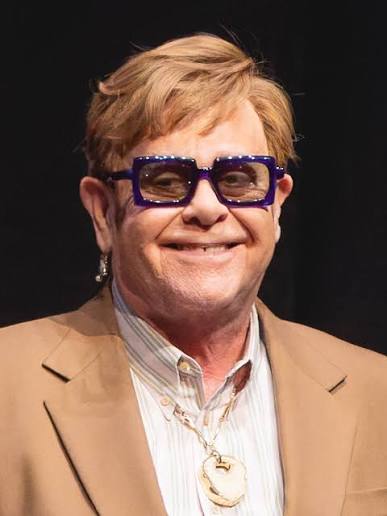
John made a surprise appearance through a pre-recorded message at the 2026 ARIA Awards in Sydney on Wednesday, November 18, where he backed a campaign known as Not AI’s To Take.
The campaign is urging the Australian government, led by Prime Minister Anthony Albanese, to ensure AI companies obtain permission and agree on payment before using copyrighted Australian creative material to train their systems.
In his message, John praised the creativity of Australian artists and appealed directly to the government to defend their work.
He said the government had a responsibility to protect Australian artists and prevent AI companies from using their work without full permission.
The intervention brought international attention to a debate that is becoming increasingly important across the global entertainment industry.
What is the Not AI’s To Take campaign?
Not AI’s To Take is a national campaign supported by organisations representing music, publishing, journalism, film, television and other creative industries.
Its central argument is that technological progress should not come at the expense of the people whose original work helps make AI systems valuable.
The campaign wants the Australian government to maintain existing copyright protections and reject proposed changes that could allow AI platforms to use creative material without first obtaining permission and agreeing on compensation.
Its supporters argue that musicians, writers, journalists, filmmakers and other creators should have meaningful control over how their work is used commercially.
The campaign was brought into the spotlight at the ARIA Awards, where musicians and industry representatives used the ceremony to draw attention to the copyright debate.
Australian performers Jack River, Dobby, Josh Pyke and KLP also addressed the audience in support of the campaign.
Other prominent musicians backing the initiative include Jimmy Barnes, Paul Kelly and Peter Garrett.
Why musicians are concerned about artificial intelligence
Artificial intelligence systems are developed using large collections of information, which can include written material, images, music and other creative works.
The concern raised by campaign supporters is that copyrighted material could be collected and used to train commercial AI products without creators receiving payment or having a meaningful opportunity to approve its use.
For musicians, the debate raises questions about ownership, compensation and the future value of original recordings and compositions.
Artists invest time, money and creative effort into producing music. They argue that technology companies should not be able to build profitable products using that work without respecting the rights of its owners.
The issue also extends beyond the music business. Journalists, authors, photographers, film producers, publishers and television organisations are concerned about how their material may be used by AI platforms.
Campaign supporters say the consequences could affect an entire creative economy, including the workers and businesses that depend on original content.
Australian creative industry warns of economic consequences
The campaign has highlighted the economic importance of Australia’s cultural and creative industries.
Figures cited by the campaign put the sector’s contribution to the Australian economy at approximately $70.3 billion in 2024–25, while almost 600,000 people worked in cultural and creative occupations or industries during 2023–24.
Those figures show why the copyright debate is not limited to famous performers or major record labels.
The sector also supports sound engineers, production crews, journalists, publishers, broadcasters, technicians, venues and other workers whose livelihoods depend on creative production.
Campaign supporters warn that weakening copyright protections could create uncertainty for businesses and reduce creators’ ability to earn from their work.
Australian government faces pressure over copyright rules
The campaign comes as the Australian government considers how existing copyright rules should apply to the development and commercial use of artificial intelligence.
Prime Minister Anthony Albanese has previously indicated that creators should be compensated for the use of their work.
The government has also said that any changes to copyright arrangements should provide meaningful control and fair compensation for creative professionals.
However, AI companies have argued that negotiating individual licences for large collections of material can be difficult. Some have also called for greater legal certainty around the use of copyrighted content in AI training.
One proposal discussed in the debate is an opt-out approach. Under such a system, copyrighted material could potentially be used unless the rights-holder takes steps to prevent it.
That proposal has attracted opposition from campaign supporters, who argue that creators should not have to monitor every AI platform or individually remove their work from training datasets.
As of November 18, the government had not announced a final copyright framework resolving the dispute. A wider legislative package covering AI-related issues was expected in late 2026 or early 2027.
Why the debate matters beyond Australia
The dispute could have implications far beyond Australia’s music industry.
Music, films, books, photographs and journalism circulate internationally, while AI platforms can be developed and used across national borders.
Decisions made by governments over copyright and AI training could therefore influence how creative material is licensed and protected in other markets.
For African musicians and entertainment professionals, including artists working in Nigeria’s growing music industry, the debate is also worth watching.
Afrobeats recordings, music videos, lyrics, artwork and other creative products are distributed internationally. Questions about permission, ownership and compensation for the use of creative material are relevant to artists and rights-holders wherever their work is commercially valuable.
However, the Australian campaign does not automatically change copyright rules in Nigeria or other countries. Its wider significance is that it adds to an international discussion about how AI development should respect the rights of original creators.
A growing test for the relationship between AI and creativity
Elton John’s intervention at the ARIA Awards has given the Australian campaign a prominent international voice.
The wider question is how governments can support technological development while ensuring that musicians and other creative professionals are not excluded from the economic value generated by their own work.
AI tools may create new opportunities for music production, distribution and creative experimentation. But the debate in Australia demonstrates that questions about consent, ownership and payment remain unresolved.
For the artists supporting Not AI’s To Take, the message is straightforward: technological innovation should respect the people whose creativity makes it possible.
The next major development will depend on how the Australian government addresses copyright protections in its forthcoming AI policy and legislative decisions.