
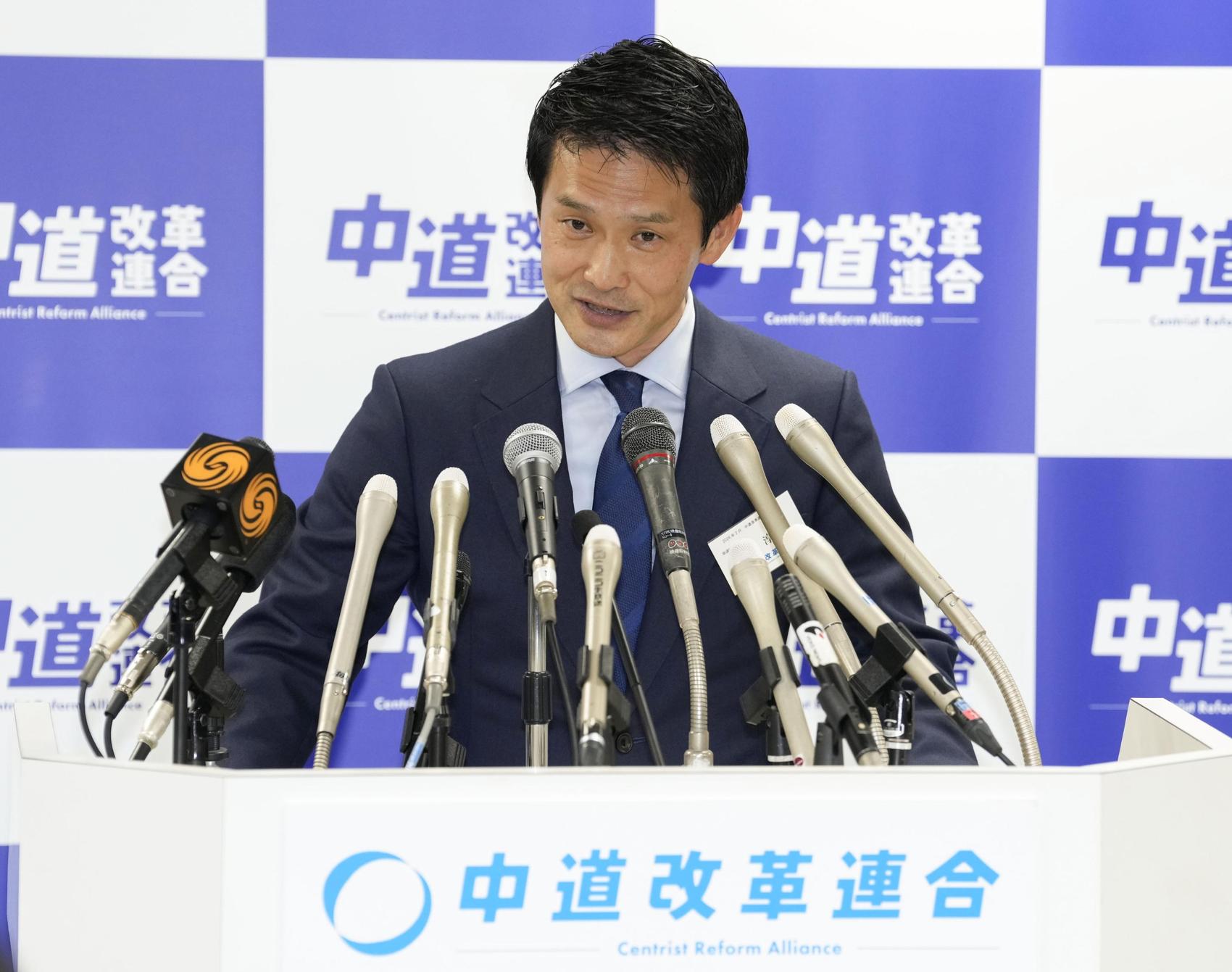
Ogawa chosen as Japan’s main opposition party leader after election defeat
Japan’s main opposition party, the Centrist Reform Alliance (CRA), has elected 54-year-old Junya Ogawa as its new leader on Friday, marking the start of a major reorganization following its poor performance in the recent general election.
Ogawa, formerly the secretary general of the Constitutional Democratic Party of Japan (CDPJ), defeated 59-year-old Takeshi Shina, the CDPJ’s former acting policy chief, securing 27 out of 49 votes from CRA lawmakers. “By strengthening our internal structure and working more closely with other political groups, I aim to deliver tangible results for the public,” Ogawa said at a press conference in Tokyo after his victory.
The two-day leadership contest wrapped up ahead of next week’s special parliamentary session, during which Prime Minister Sanae Takaichi is expected to be reelected following her ruling coalition’s sweeping win in Sunday’s election.
Formed in January by CDPJ and Komeito lawmakers, the CRA struggled in its debut election, losing more than two-thirds of its 167 seats. The devastating outcome led co-leaders Yoshihiko Noda, 68, and Tetsuo Saito, 74—former chiefs of the CDPJ and Komeito, respectively—to resign.
Ogawa, an eight-term Lower House member representing Kagawa Prefecture, will serve as leader until the end of March 2027. Of the CRA’s 49 current members, 28 come from Komeito, though none entered the leadership race. Komeito, backed by the Buddhist organization Soka Gakkai, ended its 26-year partnership with the ruling Liberal Democratic Party (LDP) last October.
Internally, Ogawa faces the challenge of uniting the party amid friction over the candidate selection process. Many CDPJ members criticized the preferential treatment given to Komeito candidates, who won all their seats thanks to favorable placement on the CRA’s proportional representation list. The CDPJ faction, by contrast, retained just 21 seats, down more than 100 from before the election.
The CRA’s disappointing performance has left it as the smallest main opposition force in postwar Japanese politics—too small to submit budget bills or file a no-confidence motion independently. Several veteran figures from the CDPJ, including former ministers Yukio Edano, Katsuya Okada, and Jun Azumi, also lost their seats.
Ogawa has pledged to promote “harmony” within the party and pursue generational renewal while maintaining dialogue with experienced lawmakers such as Noda, who served as prime minister from 2011 to 2012. He also signaled no urgency to merge the CRA with CDPJ and Komeito members in the House of Councillors, saying the move warrants careful discussion.