
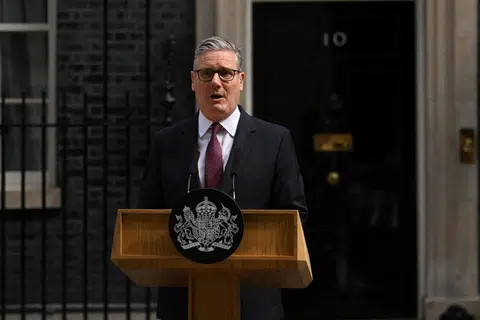
British Prime Minister Keir Starmer resigned from his post on June 22, becoming Britain’s seventh leader in a decade.
In a national address at his No. 10 Downing Street residence, Starmer said he informed King Charles in the morning and promised his successor an orderly transition of power. He will remain in power until his successor is selected, with nominations set for July 9. A new prime minister will be elected before Parliament returns in September.
Starmer also announced he will resign as leader of the Labour Party, less than two years after he led the party to a landslide election victory that promised to end Britain’s chaotic politics.
Pressure Buildup for Months
The threat to Starmer, which had been building for months, increased sharply on June 19 when Andy Burnham, the Greater Manchester mayor, decisively won a parliamentary election to return to Westminster. Burnham beat a candidate from Nigel Farage’s Reform UK party, which has led national opinion polls for more than a year.
That victory gave hope to Labour lawmakers that Burnham, a career politician known for his communication skills, could transform the fortunes of a party that has lost support under Starmer, whose popularity ratings have sunk to the lowest for any British leader.
Starmer had said on June 19 he would stand in any formal Labour leadership contest seeking to replace him. But that appeared to change over the weekend. “Keir likes to think about things,” said an anonymous source.
Rival Andy Burnham Tipped for Post
Rival Andy Burnham is tipped for the post as Starmer paves the way for Britain’s seventh leader in a decade. He is expected to set out a timetable for his departure.
Beyond saying that the country needs fundamental change and to bring down the cost of living, Burnham has yet to make clear his approach to foreign affairs, the economy, and defence. Like Starmer, he could find he has little room to manoeuvre, hemmed in by bond market investors opposed to any additional borrowing and confronted by an angry electorate which believes the country is not working properly.
Britain Faces Precarious Fiscal Situation
Britain already has the highest borrowing costs in the Group of Seven (G-7) wealthy nations due to its high debt and interest payments, years of anaemic economic growth, struggles to cut spending, and the need to invest in areas like defence.
Investors spoken to by Reuters were divided over whether Burnham, who said in September 2025 that Britain had to get “beyond this thing of being in hock to the bond markets,” would respect the need to reassure markets. He has since said he was misrepresented.
“In our view, a Burnham premiership would inherit a precarious fiscal situation with few tools to deliver meaningful change,” economists at Citibank said on June 19.
Party Members React
Skills Minister Jacqui Smith told Times Radio early on June 22 that she would have liked Starmer to stay on, but he had been weighing what was best for the country due to the “pressure that is being brought upon him.” One source said he had spent the weekend considering whether to step aside or fight a leadership contest.
Any change in leader, without even a contest within the party, could anger voters who will not have had a say in who is running the country from Downing Street.
Former health minister Wes Streeting has also said he has the backing of the 81 Labour lawmakers needed to enter a leadership race. However, one senior figure in the party believed Streeting could do a deal with Burnham, giving him a senior role if he stayed out of the contest