



ANC Coalition Talks Intensify After South Africa Election Setback

INTRO
South Africa’s African National Congress (ANC) is preparing for crucial coalition negotiations following its disappointing performance in the November 4, 2026 local government elections, as political parties compete to secure control of municipalities across the country.
The ANC has indicated that it will not adopt a single coalition formula for every municipality. Instead, the party plans to assess each council individually, taking into account local election results, political relationships and the needs of residents.
The negotiations come after the ANC recorded approximately 30.76% of the national vote, a significant decline from the 45.59% it secured in the 2021 local government elections.
Although the ANC remains South Africa’s largest political party nationally, the results have increased the importance of coalition arrangements in municipalities where no party won an outright majority.
ANC rejects a one-size-fits-all coalition strategy
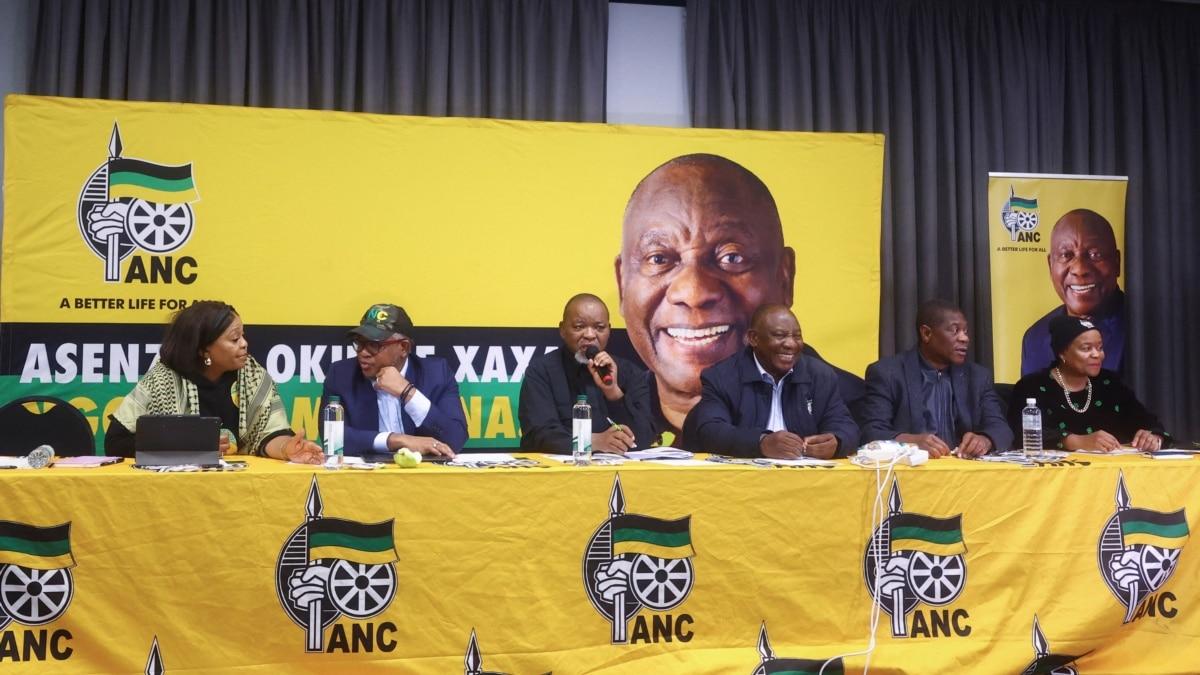
ANC spokesperson Mahlengi Bengu said the party would examine coalition opportunities municipality by municipality rather than apply one general agreement across the country.
The position was communicated ahead of the party’s Extended Special National Executive Committee meeting on November 12.
The ANC’s approach reflects the different political circumstances facing municipalities across South Africa.
A coalition arrangement that could work in Johannesburg, for example, may not be suitable for eThekwini, Buffalo City or Mbombela.
The party’s leadership is expected to guide its negotiating team on which political partners it can work with and what conditions should be attached to any agreement.
ANC secretary-general Fikile Mbalula leads the party’s coalition task team, which includes senior figures from the organisation and government.
The party has also begun engaging other political formations as it considers possible governing arrangements.
Johannesburg, Tshwane and Ekurhuleni become major negotiation battlegrounds
The three major Gauteng metropolitan municipalities are among the most closely watched areas in the coalition negotiations.
The Democratic Alliance (DA) emerged as the leading party in Johannesburg, Tshwane and Ekurhuleni but failed to secure an outright majority in any of the three cities.
In Johannesburg, the DA received 34.79% of the vote and secured 91 council seats. The ANC received 20.25% and won 63 seats, while ActionSA secured 16.27% and 43 seats.
In Tshwane, the DA won 34.37% and secured 74 seats. ActionSA received 22.07% and won 48 seats, while the ANC secured 20.22% and 44 seats.
In Ekurhuleni, the DA received 30.68% and won 66 seats. The ANC secured 22.11% and 59 seats, while ActionSA received 18.5% and 40 seats.
These results mean that parties will need support from other councillors to secure mayoral positions and establish governing majorities.
The outcome of negotiations in these cities could influence political leadership and municipal service delivery for the next five years.
ActionSA and DA leaders hold coalition discussions
ActionSA leader Herman Mashaba met DA leader Geordin Hill-Lewis on November 12 as both parties explored possible coalition arrangements.
Mashaba had previously expressed reservations about working with the DA, citing concerns about what he described as racist elements within the party.
However, the meeting showed that discussions between the two political formations were continuing despite their disagreements.
Mashaba had also proposed an arrangement involving mayoral candidates in Johannesburg, Tshwane and Ekurhuleni as part of efforts to address the coalition deadlock.
Whether the discussions will produce a formal agreement remains uncertain.
Meanwhile, the Patriotic Alliance and ActionSA have already reached a coalition agreement in Laingsburg Local Municipality, where the Patriotic Alliance agreed to support ActionSA’s mayoral candidate.
The agreement represents an early example of how smaller political parties could influence municipal leadership after the election.
ANC faces pressure to rebuild public confidence
The ANC’s reduced electoral support has increased pressure on its leadership to reconsider its political strategy and address concerns raised by voters.
Issues such as unemployment, crime, unreliable water supply, electricity challenges and deteriorating municipal infrastructure have remained major concerns in South African communities.
The party has acknowledged the need to improve municipal performance and has said that service delivery should remain central to any coalition arrangement it enters.
For the ANC, the negotiations are not simply about securing mayoral positions. They also represent an opportunity to rebuild political influence in municipalities where voters have increasingly supported opposition parties.
However, any coalition agreement will require cooperation between parties that may have significantly different political priorities.
CONCLUSION
South Africa’s municipal coalition negotiations are expected to continue as political parties work towards establishing governing majorities.
The negotiations will determine who becomes mayor, who occupies other important council positions and how municipal administrations will operate.
With 137 of the country’s 213 municipal councils classified as hung councils, the outcome of these discussions could shape local government across a substantial part of South Africa.
The major challenge will be creating stable coalitions capable of passing budgets, maintaining infrastructure and delivering essential services.
For South African residents, the real test will not simply be which party wins the negotiations, but whether the resulting municipal governments can improve everyday living conditions.