



ActionSA Rejects DA Offer as ANC Coalition Deal Advances in Gauteng

INTRO – ActionSA Rejects DA’s Final Offer as ANC Coalition Deal Advances in Gauteng
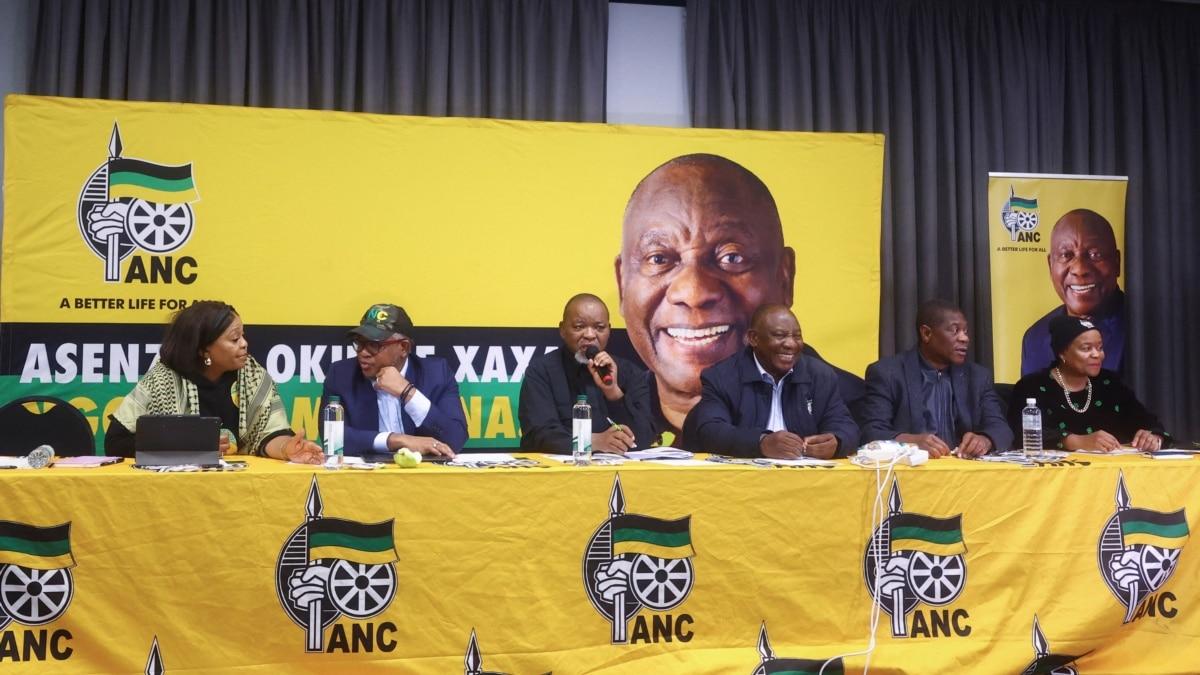
South Africa’s political negotiations have entered a decisive stage after ActionSA rejected the Democratic Alliance’s latest coalition proposal, increasing the possibility of an agreement with the African National Congress (ANC) to govern Gauteng’s major metropolitan municipalities.
The disagreement could reshape political control in Johannesburg, Tshwane and Ekurhuleni following the November 2026 local government elections, in which the DA emerged as the largest party in all three municipalities but failed to secure an outright majority.
ActionSA leader Herman Mashaba is now increasingly positioned to return as Johannesburg mayor under a proposed arrangement with the ANC and other political parties.
However, the negotiations have not yet produced a signed final agreement, and the parties still need to settle the details of their governing programme and secure sufficient council support.
Why ActionSA Rejected the DA’s Proposal
The disagreement between ActionSA and the DA centres on the distribution of political leadership positions and representation in municipal administrations.
ActionSA had proposed a power-sharing arrangement that would give both parties meaningful representation in the three Gauteng metros.
Among its demands were changes to the DA’s preferred mayoral candidates in Johannesburg and Tshwane.
ActionSA opposed Helen Zille becoming Johannesburg mayor and wanted former Tshwane mayor Cilliers Brink to step aside in favour of Nasiphi Moya.
The party also proposed an equal division of selected mayoral committee positions and other leadership responsibilities.
The DA rejected the arrangement, arguing that it had received the largest share of votes in all three metropolitan municipalities and should therefore have a leading role in their administrations.
DA leader Geordin Hill-Lewis subsequently presented a different proposal based on a confidence-and-supply arrangement.
Under that model, ActionSA would support DA mayoral candidates in Johannesburg and Ekurhuleni while retaining control of the administration in Tshwane.
ActionSA rejected the proposal, arguing that it would leave the party without meaningful executive representation in Johannesburg and Ekurhuleni despite its contribution to the DA’s governing numbers.
ActionSA national chairperson Michael Beaumont described the DA’s counteroffer as unacceptable and confirmed that the two parties had failed to reach an agreement.
ANC Offers Herman Mashaba a Possible Return to Johannesburg
While negotiations with the DA struggled, ActionSA made progress in discussions with the ANC.
An emerging in-principle arrangement would see Herman Mashaba return as Johannesburg mayor, while Nasiphi Moya would retain her position as mayor of Tshwane.
The proposed arrangement also envisages an ANC candidate serving as Mashaba’s deputy in Johannesburg.
The negotiations could involve the Economic Freedom Fighters (EFF), former president Jacob Zuma’s uMkhonto weSizwe (MK) Party and smaller political formations to strengthen the coalition’s numbers.
Beaumont has indicated that ActionSA and the ANC are broadly aligned on power-sharing arrangements but still need additional partners to establish a stable governing majority.
He said the parties were working towards a written agreement and a shared programme of government.
The final allocation of positions and responsibilities has not yet been settled.
Why the DA Could Lose Control Despite Winning the Most Votes
The coalition negotiations highlight an important feature of South Africa’s proportional-representation municipal electoral system.
Winning the largest share of votes does not automatically give a political party control of a municipal council.
In Johannesburg, the DA received approximately 35% of the vote, ahead of the ANC with about 20% and ActionSA with approximately 16%.
No party secured the majority required to govern the city independently.
The parties must therefore negotiate with other political formations to obtain enough council votes to elect a mayor, speaker and other municipal office-bearers.
This has created an opportunity for the ANC and smaller parties to combine their council representation and potentially prevent the DA from leading Johannesburg.
The same political challenge applies to Tshwane and Ekurhuleni, where coalition negotiations are also necessary.
What Could Happen in Johannesburg, Tshwane and Ekurhuleni?
The emerging discussions could produce different political arrangements across Gauteng’s three metropolitan municipalities.
Johannesburg: Herman Mashaba is the leading candidate under the emerging ANC-ActionSA arrangement. The ANC is expected to receive a significant leadership role, including the proposed deputy mayor position.
Tshwane: ActionSA’s Nasiphi Moya is expected to retain the mayoralty under the proposed arrangement.
Ekurhuleni: The ANC is seeking a leading role, although the final allocation of positions and supporting parties still needs to be confirmed.
The proposed arrangement would require cooperation with additional political parties, particularly the EFF and MK Party, as well as smaller formations.
The negotiations are therefore not simply about deciding who becomes mayor. They also involve the distribution of executive positions, municipal oversight responsibilities and the policies that will guide local government.
DA Continues to Pursue Alternative Coalition Arrangements
Despite the setbacks in Gauteng, the DA has continued exploring other options.
On November 23, the party presented a broader national coalition framework proposing cooperation with the ANC in 137 hung municipalities.
Under the proposal, the ANC would lead 93 municipalities, the DA 24 and the Inkatha Freedom Party 20, subject to agreement with the IFP.
The DA described the proposal as a stability framework intended to reduce political uncertainty and prevent repeated changes in municipal leadership.
The party also argued that the largest party within a coalition should generally lead the municipal administration.
However, the proposal does not resolve the disagreement between the DA and ActionSA over Johannesburg, Tshwane and Ekurhuleni.
The competing arrangements demonstrate how difficult it has become for political parties to balance electoral performance, leadership demands and the need to establish workable municipal governments.
Service Delivery Will Be the Real Test for Gauteng’s New Coalitions
The political contest is taking place against a background of growing public concern about municipal performance.
Johannesburg has experienced repeated changes in political leadership since 2021, with successive coalition governments struggling to maintain stability.
Residents and businesses continue to face concerns involving electricity, water infrastructure, road maintenance, waste collection and the financial management of the city.
A new coalition will therefore face pressure to demonstrate that political agreements can translate into better services.
The challenge will be particularly important in Johannesburg, South Africa’s largest city and a major centre for finance, commerce and investment.
Any administration will need to establish clear priorities, maintain financial discipline and avoid the political disagreements that have undermined previous governing arrangements.
CONCLUSION
The coming council meetings will be crucial in determining the political future of Gauteng’s major municipalities.
ActionSA and the ANC are expected to continue working towards a written coalition agreement, while the EFF, MK Party and smaller parties remain important to securing sufficient support.
The DA, meanwhile, has not abandoned its efforts to secure governing arrangements and is continuing to promote alternative coalition models.
Until the agreements are signed and mayors are elected by the respective councils, the proposed leadership changes should not be treated as completed.
For Gauteng residents, the most important question is whether the next coalition governments can provide the stability and effective service delivery that previous municipal administrations have struggled to achieve.
The outcome could also influence national political relationships as parties prepare for future electoral contests.