
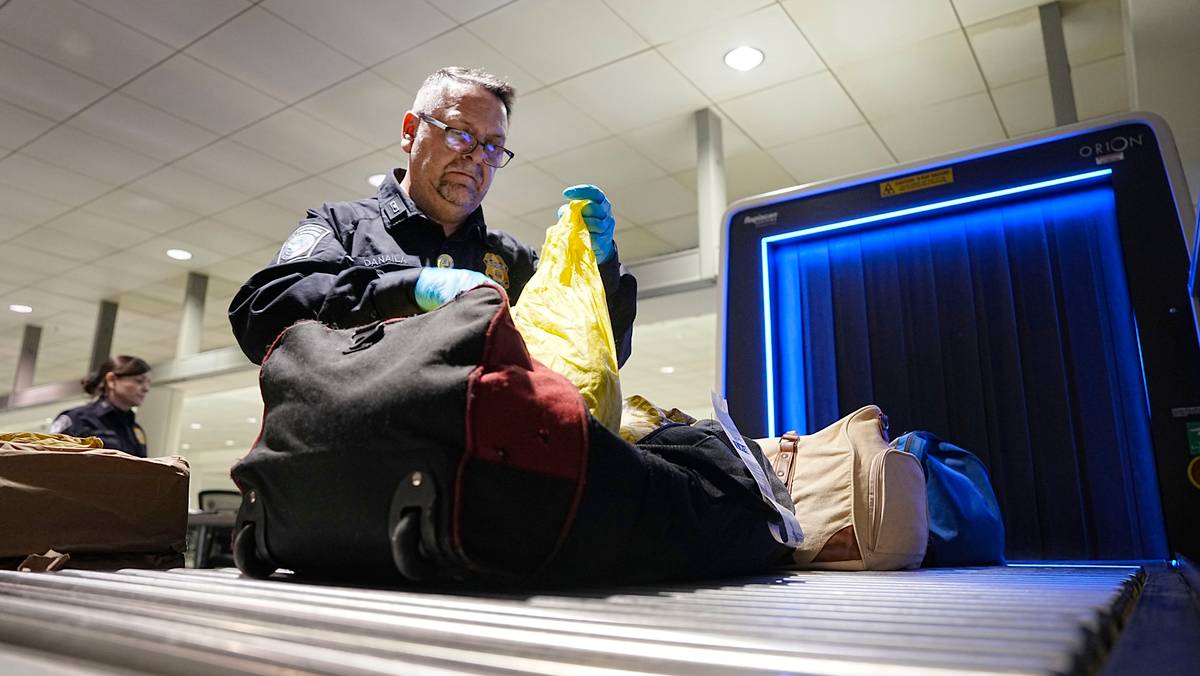
U.S. Customs and Border Protection (CBP) has seized more than $44,000 in unreported cash from a traveler at Philadelphia International Airport, and the agency is using the case to warn the public that failing to declare amounts over $10,000 can lead to serious legal and financial consequences. Under federal law, passengers entering or leaving the United States must report any combined amount of currency or monetary instruments exceeding $10,000 to a CBP officer, usually by filing a FinCEN Form 105.
What happened in Philadelphia
CBP officers discovered roughly $44,690 in U.S. currency hidden in a passenger’s pockets, in separate envelopes, and inside his carry‑on luggage before a flight from Philadelphia to Mexico. The money was seized for violating currency‑reporting rules; officers later returned a small portion ($240) for humanitarian purposes and released the individual.
Legal requirement and penalties
Federal law (31 U.S.C. § 5316) requires travelers to report, but not to limit, any amount over $10,000, whether they are bringing money into or taking it out of the country. If travelers fail to declare or give false information, CBP can seize the cash, impose heavy civil fines, and, in intentional cases, pursue criminal charges that may include multi‑year prison terms.
CBP’s broader message
Acting Area Port Director Elliott Ortiz emphasized that no amount of concealment can hide bulk currency from CBP screening, urging travelers to declare their money truthfully to avoid criminal charges. CBP notes that its officers are actively monitoring passengers at ports of entry—including at airports and for cruise‑ship passengers stopping briefly in U.S. ports—to enforce these rules.