
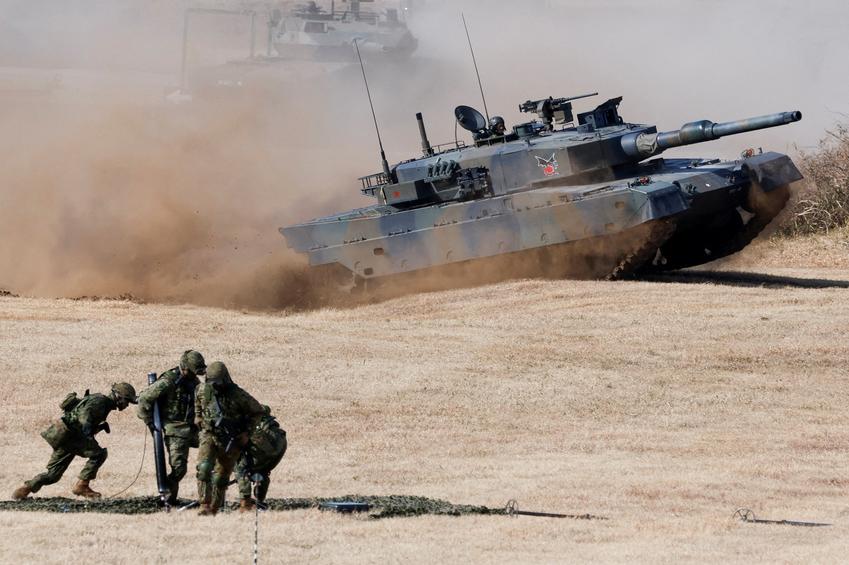
Japan’s imminent easing of arms export rules has sparked strong interest from Warsaw to Manila, Reuters reporting found, as President Donald Trump wavers on security commitments to allies and the wars in Iran and Ukraine strain U.S. weapons supplies.
Prime Minister Sanae Takaichi’s ruling party approved the changes this week as she tries to invigorate the pacifist country’s military industrial base. Her government will formally adopt the new rules as soon as this month, three Japanese government officials told Reuters.
Despite largely isolating itself from global arms markets since World War II, Japan spends enough on its own military – $60 billion this year – to sustain a sizeable defense industry capable of manufacturing advanced systems like submarines and fighter jets.
Among the potential new customers are the Polish military and the Philippine navy, which are undergoing modernization amid regional security challenges, according to Reuters interviews with Japanese officials and foreign diplomats in Tokyo. Defence contractors Toshiba and Mitsubishi Electric are hiring staff and adding capacity to capitalize on demand, their executives said, providing previously unreported details.
One of the first deals Takaichi’s government will likely approve are exports of used frigates to the Philippines, which is locked in maritime confrontation with Beijing in the South China Sea, according to two of the Japanese officials. The likely sale may be followed by missile defense systems, the officials said.
Warsaw and Tokyo can help plug gaps in each other’s arsenals, cooperating in areas like anti-drone and electronic warfare systems, said Mariusz Boguszewski, deputy chief of mission at Poland’s embassy in Japan.
“There are some bottlenecks that we can overcome having Japan on board,” he added, without providing details of specific deals. Poland’s WB Group, one of Europe’s largest private defense contractors, last year signed a tentative drone deal with Japanese aircraft maker ShinMaywa.
Three other European diplomats said Japan’s easing provided a chance to lessen their heavy dependence on U.S. weapons production, which is strained by conflicts. Trump’s unpredictability, such as his threats to leave the NATO security alliance and invade Greenland, have also heightened the push to diversify, according to the diplomats, who requested anonymity to discuss sensitive matters.

“Offers are coming from everywhere,” said Masahiko Arai, senior vice president at Mitsubishi Electric’s defense unit, which has been adding staff in London and Singapore to facilitate defense exports.
Takaichi’s office declined to answer specific questions for this story, instead referring Reuters to a February 20 speech where she said she was reviewing the controls to bolster Japan’s defense production and strengthen capabilities of allies.
Tokyo’s export overhaul has previously been encouraged by successive U.S. administrations, including Trump’s, eager for allies to contribute more to collective defense efforts.
White House spokeswoman Anna Kelly did not respond to questions from Reuters about the changes to Japanese policy but said that the two nations were closer than ever under Trump and Takaichi.
China’s foreign ministry did not immediately respond to questions about Japanese frigates potentially being sent to the Philippines. Ministry spokeswoman Mao Ning told reporters in April that Beijing was concerned about changes in Tokyo’s arms export policy and that it should “act prudently in military and security areas.”