
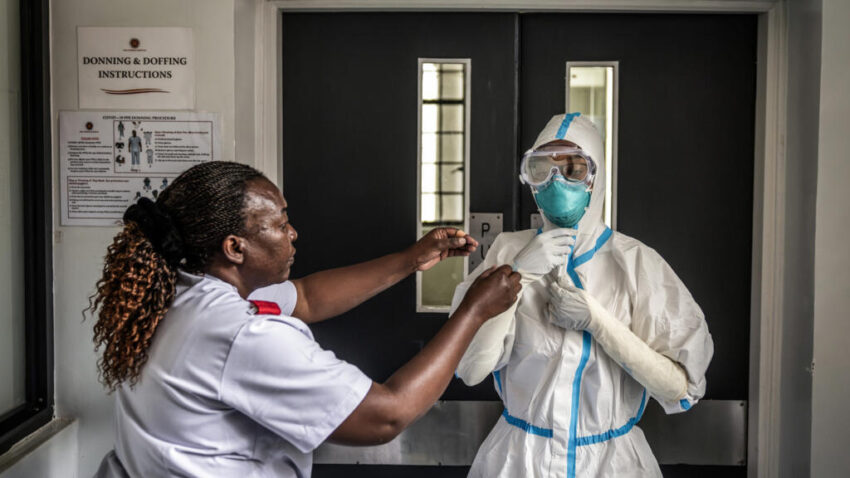
The World Health Organisation, WHO, has confirmed that Nigeria currently has no Ebola case following the medical evacuation of a patient and her husband to Switzerland.
The WHO Regional Director for Africa, Dr Mohamed Janabi, made this known in a statement posted on his official X handle on Monday. He said the evacuation was completed earlier in the morning, adding that both the patient and her husband were Swiss citizens.
Janabi said the patient had been clinically stable before her evacuation, following the successful management of her condition by Nigerian medical teams through the acute phase of the illness.
He explained that Nigeria would continue to monitor 52 contacts linked to the case, while Switzerland would take over the management of the patient and monitor her husband, who was listed as contact number 53.
“Nigeria has no Ebola cases after the patient and her husband were medically evacuated to Switzerland earlier this morning,” Janabi said.
The WHO official commended the Federal Government, health workers, clinicians, emergency responders and partner organisations involved in the Ebola response. He described the successful management of the patient as a major achievement for Nigeria’s public health system.
According to him, the development reflects Africa’s expertise, resilience and leadership in responding to public health emergencies. He said the collaboration between Nigerian authorities, WHO and international partners demonstrated the importance of coordinated action in containing infectious diseases.
Janabi, however, cautioned that the country must not relax its vigilance despite the evacuation of the patient. He stressed that continued monitoring of contacts and sustained implementation of response measures remained essential to preventing any possible spread of the virus.
“While we celebrate this achievement, we must remain vigilant. Continued monitoring of contacts and other response measures is critical,” he said.
Ebola is a highly infectious viral haemorrhagic fever that can spread through direct contact with the blood, body fluids or tissues of an infected person. It can also spread through contact with contaminated objects or the bodies of people who died from the disease.
Early symptoms include fever, fatigue, muscle pain, headache and sore throat. These may later progress to vomiting, diarrhoea, rash, impaired kidney and liver function, and in severe cases, internal and external bleeding.
Health experts say early detection, isolation of suspected cases, contact tracing and infection prevention measures are crucial to controlling outbreaks. They also stress the importance of community awareness, safe burial practices and rapid laboratory confirmation of suspected cases.
The WHO’s confirmation that Nigeria has no active Ebola case is expected to reassure the public and reduce concerns over a wider outbreak. It also underscores the effectiveness of Nigeria’s emergency response system, which has previously been credited with containing Ebola outbreaks.
Nigeria recorded its first Ebola case in 2014 after a Liberian-American, Patrick Sawyer, arrived in Lagos with the virus. The country’s rapid response, led by health authorities and supported by international partners, helped contain the outbreak within months, earning global recognition.
The latest development is likely to strengthen confidence in Nigeria’s capacity to detect, investigate and manage public health threats. It also highlights the importance of maintaining strong surveillance systems, especially at points of entry such as airports and seaports.
Janabi said Switzerland would assume responsibility for the continued treatment of the patient and the monitoring of her husband, while Nigeria would maintain close follow-up on the remaining contacts.
He added that the successful evacuation and management of the case should serve as a reminder that health security requires continuous investment, preparedness and cooperation between countries.
Public health authorities are expected to continue monitoring the situation and provide updates if any new suspected case is identified. Nigerians have also been urged to maintain good hygiene practices, avoid contact with suspected cases and report unusual illness promptly to health authorities.
As the response continues, the WHO said Nigeria’s experience demonstrates that early action, strong coordination and sustained vigilance can prevent the spread of dangerous infectious diseases and protect public health