




Six Nigerian States Uncover Thousands of Suspected Ghost Workers

Six Nigerian States Uncover Thousands of Suspected Ghost Workers in Payroll Audits – INTRO
Fresh payroll investigations across six Nigerian states have uncovered thousands of suspected ghost workers, questionable employment records and irregular salary payments, raising concerns about the management of public funds.
The findings, reported on November 15, 2026, cover Katsina, Rivers, Benue, Zamfara, Kogi and Cross River states.
The investigations identified problems including duplicate employee records, questionable appointments, unverified personnel, salary overpayments and workers allegedly receiving multiple payments from government establishments.
Some state governments have reported significant savings following payroll verification exercises, while others are yet to publish complete details of their financial losses, recoveries and prosecutions.
The findings have renewed questions about how fictitious employees enter government payroll systems and why repeated verification exercises have not completely eliminated the problem.
Katsina Identifies 3,488 Payroll Irregularities
In Katsina State, a screening exercise involving personnel across the state’s 34 local government councils and Local Education Authorities identified 3,488 payroll irregularities.
The exercise covered 50,172 personnel, of whom 46,380 were verified, according to the report.
The screening committee identified issues including falsified dates of birth, questionable certificates, absenteeism, illegal promotions and alleged fraudulent appointments.
It also recovered ₦4.6 million from workers accused of collecting salaries from both state and federal government establishments.
The committee projected that implementing its recommendations could generate monthly savings of approximately ₦453.3 million, equivalent to more than ₦5.4 billion annually.
Governor Dikko Umaru Radda had separately disclosed that local government councils had already saved about ₦500 million, with the figure expected to increase.
However, the separate audit of the state civil service payroll had not been publicly completed at the time of the report.
Rivers Flags 5,397 Unverified Workers
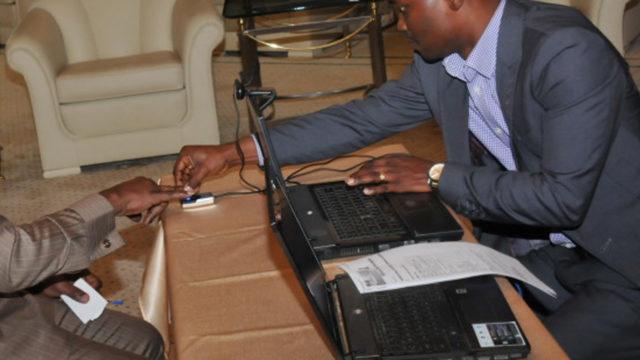
Rivers State also recorded significant discrepancies during a biometric verification exercise covering its civil service and local government areas.
According to information attributed to the Office of the Head of Service, the state previously had approximately 43,000 employees on its civil service nominal roll.
Biometric screening confirmed 37,703 employees, leaving 5,397 records unverified or potentially fraudulent.
The pension payroll also raised concerns.
Of the 25,000 pensioners listed on the state register, 19,186 were verified, leaving 5,814 outstanding cases.
At the local government level, 2,004 of 2,600 pensioners were verified.
These figures highlight the importance of reconciling employee and pension records before government funds are committed to salary and pension payments.
However, unverified records should not automatically be classified as fraudulent without further investigation.
Benue Reports ₦1.2 Billion Monthly Savings
Benue State reported one of the largest immediate savings figures highlighted in the investigation.
Governor Hyacinth Alia’s administration said it uncovered approximately 2,500 suspected ghost workers on the payroll of the state’s 23 local government areas in 2023.
The governor, through his Chief Press Secretary, Tersoo Kula, said removing the questionable names saved the government more than ₦1.2 billion in one month.
The discovery followed concerns about salary payments to teachers and local government employees.
The administration said the verification exercise exposed serious weaknesses in the payroll system.
However, further clarification from relevant state officials would help establish how the savings have been sustained and whether additional cases have been uncovered since the original exercise.
Zamfara Identifies 2,363 Suspected Ghost Workers
In Zamfara State, a verification committee established by Governor Dauda Lawal identified 2,363 suspected ghost workers allegedly receiving approximately ₦193.6 million every month.
The findings were contained in a report submitted to the governor in February 2025 following a verification exercise established in August 2024.
The committee also identified 1,082 employees who were due for retirement but allegedly continued receiving salaries amounting to approximately ₦80.5 million monthly.
Other findings included 220 minors on the payroll and 207 workers who were not cleared or were recommended for suspension.
The committee also identified questionable employee records, irregular secondments and workers whose appointment details raised concerns.
Governor Lawal’s spokesman, Sulaiman Bala Idris, said the exercise had generated savings of more than ₦200 million monthly.
The investigation also highlighted cases of alleged salary inflation in the education and health sectors.
For example, one secondary school teacher was reportedly receiving ₦700,000 monthly despite having an entitlement of ₦140,000.
The report also described a hospital where only two doctors were confirmed out of 22 listed on its payroll.
These findings raise serious questions about personnel verification and the effectiveness of internal financial controls.
Kogi Removes More Than 25,000 Suspected Ghost Workers
Kogi State reportedly uncovered more than 25,000 suspected ghost workers through verification exercises conducted between 2016 and 2026.
The exercise reduced the combined workforce figure from approximately 88,973 to 63,870.
The verification covered state civil servants, local government employees and teachers.
The administration of former Governor Yahaya Bello carried out major aspects of the exercise, while incumbent Governor Ahmed Usman Ododo has indicated plans to recruit workers to fill vacancies.
However, the state still needs to provide updated information on the number of verified employees, the amount saved and the procedures used to resolve cases involving workers removed from the payroll.
Cross River Faces Questions Over Payroll Records
Cross River State has also recorded thousands of questionable payroll entries.
The investigation reported that more than 2,800 questionable records were flagged within 18 months, while 645 cases of double salary payments were identified in October 2026.
A verification update showed that 61,167 employees and pensioners had been profiled as of October 13.
Of that number, 52,330 had been validated, while 8,837 cases remained outstanding.
The outstanding cases included personnel who had not started verification and others whose records were still being processed.
The report also identified concerns about invalid Bank Verification Numbers, duplicate entries and questionable appointments.
However, the state has not published a comprehensive account of the total financial losses, recoveries or savings resulting from its recent verification exercises.
The situation has also generated complaints from some workers who say they completed verification but experienced delays or exclusion from the payroll.
This highlights the need for governments to balance fraud prevention with protection for genuine employees.
Payroll Fraud Raises Accountability Questions
The discoveries across the six states highlight weaknesses that can occur when government personnel records are not properly maintained.
Payroll manipulation can involve fictitious employee identities, duplicate records, questionable appointments and unauthorised changes to salary information.
Where such practices are established, investigations should identify not only the individuals receiving the money but also officials who may have facilitated the fraudulent payments.
The Independent Corrupt Practices and Other Related Offences Commission (ICPC) has previously reported separate findings involving suspected ghost workers in federal government institutions.
In July 2026, the commission disclosed that it had uncovered 908 suspected ghost workers across at least 50 federal ministries, departments and agencies and recovered approximately ₦942 million linked to the investigation. <Cite refs={[“turn105329search2″,”turn105329search4”]}/>
The federal investigation is separate from the six-state findings, but it demonstrates that payroll irregularities are not limited to state governments.
CONCLUSION – What Nigerian States Need to Do Next
The latest findings raise an important question: what happens after suspected ghost workers are identified and removed?
State governments need to publish transparent audit reports showing the number of verified employees, confirmed fraudulent records, recoveries and actual savings.
They should also strengthen biometric verification, regularly reconcile payroll databases and investigate officials suspected of manipulating personnel records.
At the same time, workers whose salaries are suspended because of incomplete or disputed records should have access to fair and timely appeals.
Without prosecution where evidence supports criminal charges, improved verification and transparent reporting, payroll fraud could continue despite repeated government audits.
For taxpayers, the ultimate test is whether these exercises result in better management of public money, more reliable salary payments and stronger accountability across Nigeria’s public service.