
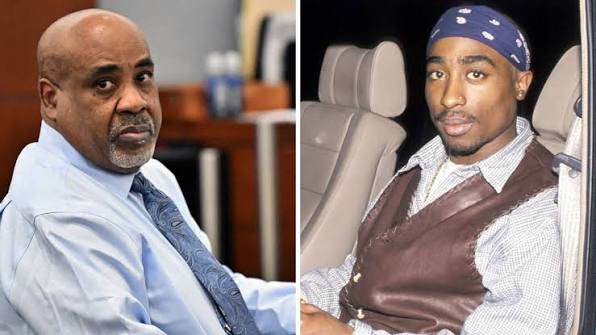
A jury on Monday, Aug. 31 found Duane “Keffe D” Davis, 63, guilty of first‑degree murder for his role in the 1996 drive‑by shooting that killed rap icon Tupac Shakur.
The verdict concluded a roughly two‑week trial held more than three decades after Shakur, 25 at the time, was shot in Las Vegas. Davis was the only person ever charged in the slaying; he was tried on one count of murder with a deadly weapon and gang enhancements. The jury — 10 women and six men — heard about two dozen prosecution witnesses and three for the defense.
Prosecutors relied heavily on Davis’ own past statements, including media interviews and passages from his 2019 memoir, arguing those remarks show he orchestrated the attack. They say Davis — a former gang member who did not fire the shots himself — acted as a “shot‑caller,” arranging the shooting in retaliation for a casino lobby fight earlier that night involving Shakur, his entourage and Davis’ nephew.
Chief Deputy District Attorney Binu Palal told jurors the case is “drenched in circumstantial evidence,” but argued it showed planning and premeditation. He said Davis obtained a gun, placed himself in the Cadillac with others and “went hunting” for Shakur and Death Row Records co‑founder Marion “Suge” Knight. Prosecutors played short clips of Davis’ interviews in which he discussed the shooting and promoted his book.
Defense attorney Michael Sanft acknowledged his client made inflammatory statements but told jurors those were braggadocio and efforts to sell books, not reliable confessions. Sanft stressed the absence of physical evidence putting Davis in the Cadillac with the shooter and said investigators once believed Davis’ claims were not credible.
At trial the prosecution played a 2008 police interview in which Davis said he supplied the gun and that his nephew, Orlando “Baby Lane” Anderson, fired the shots. Several other men who were allegedly in the Cadillac have since died, limiting eyewitness testimony.
Davis was indicted on an open murder charge that allowed the jury to decide whether the killing was first‑ or second‑degree. Now convicted of first‑degree murder, he faces up to life in prison.