
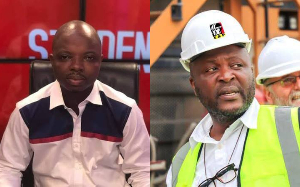
NPP Bono Regional Chairman Kwame Baffoe, popularly known as Abronye DC, has made a strong case for Ghanaian ownership of the country’s mineral resources. He argues that businessman Ibrahim Mahama has shown a greater commitment to local development than some multinational mining companies.
In a striking endorsement, the outspoken opposition figure claimed that development undertaken by Engineers & Planners at Damang surpasses what Newmont has delivered in the Ahafo area over the past 20 years. The article does not give figures or other evidence to back the comparison, which remains Abronye’s own assessment.
A case for indigenous investors
According to Abronye, the performance of Mahama’s company is a compelling argument for Ghana to entrust more of its gold resources to capable indigenous investors, rather than relying mainly on foreign mining firms.
He said that letting Ghanaian entrepreneurs control and develop the country’s minerals would keep more of the economic benefits at home and directly improve the lives of ordinary Ghanaians. Such investors, he argued, are better placed to invest in local communities, create jobs and retain wealth within the national economy.
An admission about Nyinahin
Perhaps the most remarkable part of his remarks was his acknowledgement of his earlier role in efforts to block Mahama’s business interests. Abronye disclosed that he was among those instrumental in opposing the Nyinahin bauxite concession in the Ashanti Region, a controversy that generated considerable political and legal debate in 2017.
At the time, he challenged the mining lease granted to Exton Cubic Group Limited, which had engaged Engineers & Planners to carry out prospecting at Nyinahin. His latest comments therefore represent a significant shift from that position, particularly coming from a prominent opposition figure who has previously criticised Mahama and his business interests.
The Damang takeover
Engineers & Planners formally took over the Damang Mine in April 2026, after a competitive selection process following the expiry of the previous mining lease held by Gold Fields. Mahama has since outlined ambitious plans for infrastructure and community development at Damang, including improvements in transportation, healthcare and recreational facilities.
Abronye’s endorsement, despite the political differences between the two men, adds a new dimension to the national conversation about Ghanaian ownership of strategic mineral assets.
A wider debate on local ownership
The comparison with Newmont also raises broader questions about the developmental impact of multinational mining companies, especially in communities that have hosted large-scale operations for decades. It brings fresh attention to the debate over local participation, mineral ownership and the extent to which Ghana’s natural resources should support sustainable national development.
Abronye maintained that, beyond political affiliation, the central consideration should be whether those given charge of Ghana’s mineral wealth can deliver meaningful and measurable benefits to Ghanaians.
What to watch
Mahama’s Damang plans are still at an early stage, since the company took over only in April. Whether the promised improvements in transport, healthcare and recreation materialise, and how communities around the mine judge them, will shape how far Abronye’s praise holds up. Newmont, for its part, has not been quoted in the article, so its side of the comparison is absent.