





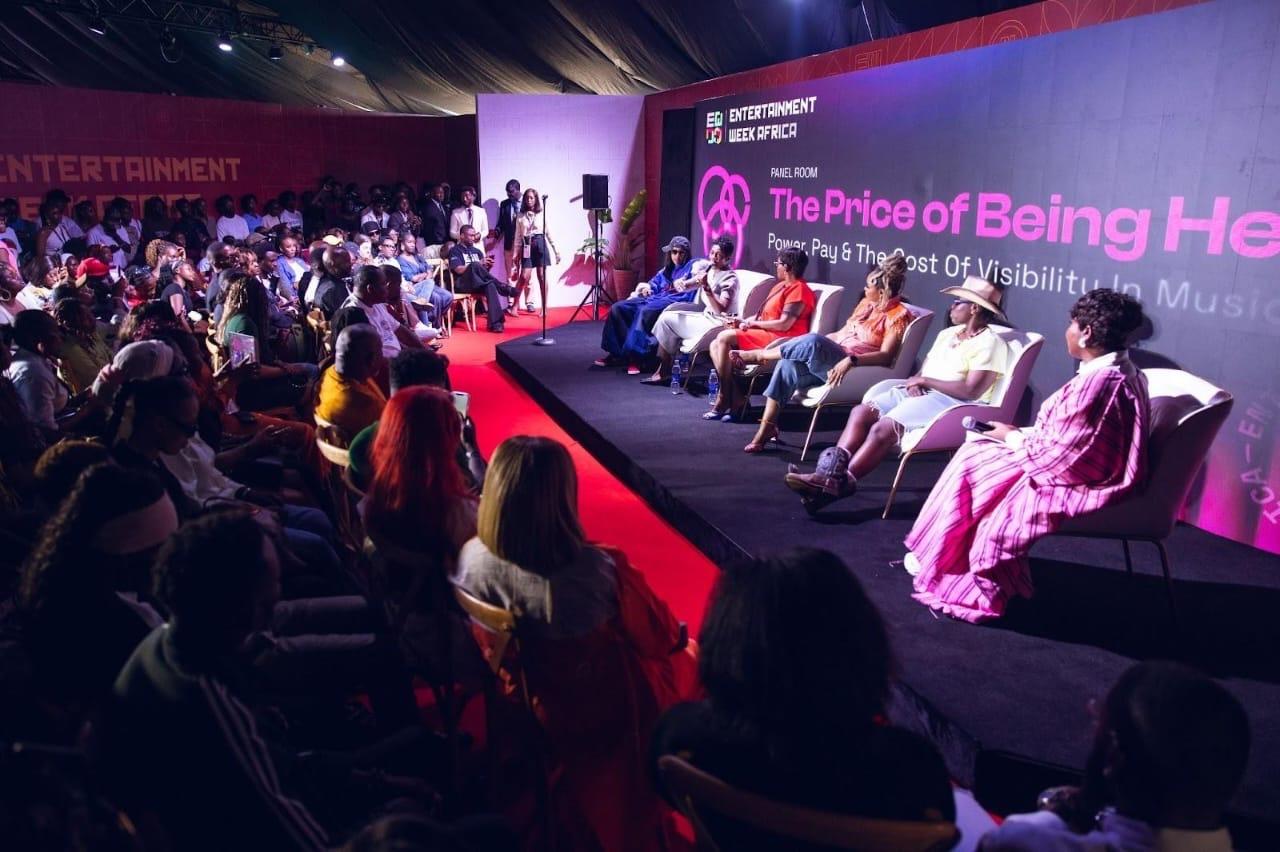
Entertainment Week Africa Ends as SA Faces Creative Funding Questions

INTRO – Entertainment Week Africa Ends as South Africa Faces Fresh Questions Over Creative Industry Funding
South Africa’s creative industry is facing renewed questions about investment, funding and job security as Entertainment Week Africa 2026 concludes in Lagos, Nigeria, with a stronger focus on turning African creativity into sustainable businesses.
The six-day event, which ran from November 17 to 22 under the theme “Closing the Gap”, brought together creatives, entrepreneurs, investors, policymakers and entertainment professionals across music, film, television, fashion, technology and other creative sectors.
South Africa was among the African countries represented at the expanded continental edition.
While the event focused on opportunities across Africa’s creative economy, developments in South Africa have highlighted the challenges of ensuring that creative talent translates into employment, business growth and long-term investment.
On Tuesday, November 24, South Africa’s parliamentary Portfolio Committee on Trade, Industry and Competition received an update on the government’s Film and Television Production Incentive Programme.
The committee was told that 17 applications valued at R233 million had been approved since September 2026, while nine claims worth approximately R210.2 million had been paid.
However, lawmakers also raised concerns about disagreements and complaints over the representation of industry stakeholders in discussions about the programme.
Entertainment Week Africa Focuses on Funding and Business Opportunities
Entertainment Week Africa has grown from a Lagos-based creative gathering into a continental platform connecting talent, businesses, investors and industry organisations.
Its 2026 edition featured seven major industry tracks covering music, film and television, fashion and beauty, artificial intelligence and technology, art and animation, live events and production, and creative enterprise.
Rather than focusing exclusively on performances and celebrity appearances, the programme was designed to address the business challenges affecting African creators.
These included access to finance, intellectual property ownership, international distribution, production investment, technology and commercial partnerships.
The organisers described the central theme, “Closing the Gap”, as an effort to move African creative industries beyond cultural recognition towards stronger ownership, investment and economic returns.
The event also included markets, workshops, showcases and investor-facing activities intended to connect creative businesses with potential commercial partners.
According to the organisers, delegations from more than 18 African countries were expected, including South Africa, Kenya, Ghana, Rwanda, Senegal, Uganda and Tanzania.
EWA Introduces Grant Pool for Selected Creative Businesses
One of the major funding developments associated with the 2026 edition was the introduction of a grant pool for selected businesses participating in the EWA Deal Room programme and its alumni network.
The initiative was announced in October as part of the organisers’ effort to provide practical support beyond mentorship and networking.
The Deal Room is designed to help creative and technology entrepreneurs strengthen their business models, prepare investment pitches and connect with potential investors.
Its previous edition received more than 178 applications. According to BusinessDay, nine companies advanced to the accelerator stage, while four attracted live investor interest and the programme recorded N25 million in funding.
For 2026, the organisers said selected businesses would be assessed by a jury that includes their lead mentors.
However, the organisers had not publicly disclosed the total size of the new grant pool in the information available for this report. The announcement also did not make the funding a general grant available to every African creative business.
The initiative reflects a wider problem facing creative entrepreneurs: many have marketable ideas and audiences but struggle to secure the capital needed to expand production, hire staff, develop intellectual property or enter new markets.
South Africa’s Film Industry Receives R233 Million Incentive Update
The funding conversation is particularly relevant to South Africa, where the film and television industry has spent much of 2026 seeking clarity over government production incentives.
The Film and Television Production Incentive Programme, administered by the Department of Trade, Industry and Competition, is intended to support qualifying productions and encourage investment in the country’s screen industry.
However, delays in processing applications, payment uncertainty and administrative difficulties have raised concerns among production companies and industry workers.
During its meeting on Tuesday, November 24, the parliamentary Portfolio Committee on Trade, Industry and Competition received an update on efforts to address these challenges.
The Department of Trade, Industry and Competition reported that 17 applications valued at R233 million had been approved since September 2026.
It also reported that nine claims totalling approximately R210.2 million had been paid.
The committee welcomed the resumption of the incentive programme’s adjudication committee in August and efforts to strengthen administrative capacity and reduce the application backlog.
These figures indicate progress in processing support for qualifying productions, although they do not mean that every outstanding application or payment dispute has been resolved.
Parliament Raises Concerns Over Industry Representation
Despite the progress reported by the department, the parliamentary committee raised a separate concern about the representation of industry stakeholders in discussions over the incentive programme.
The committee rejected the submission of separate reports from the department and the Save SA Film and TV Jobs Coalition.
It instead requested one consolidated report reflecting the views of the entire industry.
Committee chairperson Mzwandile Masina said lawmakers had received complaints about certain industry participants being excluded from the discussions.
The committee noted that the coalition represents approximately 95 per cent of the organised industry but raised concerns about the remaining 5 per cent not being adequately represented.
It directed the department and industry stakeholders to work together on a single report and said it would reconvene the matter in the next quarter.
The issue matters because government incentive policies influence production decisions, investor confidence and employment across the film and television value chain.
A production does not only employ actors and directors. It also creates work for camera operators, editors, sound technicians, transport providers, catering companies, equipment suppliers and other small businesses.
Uncertainty over incentives can therefore affect businesses far beyond the production companies applying for support.
Why Creative Funding Matters Beyond Film and Television
The funding challenge extends beyond the screen industry.
Music businesses require capital for recording, marketing, distribution and touring. Fashion entrepreneurs need money for materials, manufacturing and retail expansion. Animation and digital-content companies need equipment, skilled workers and access to international buyers.
In many cases, creative businesses also struggle to demonstrate their commercial value to traditional lenders and investors.
Unlike businesses built around physical property or established inventory, some creative enterprises depend heavily on intellectual property, audience relationships, licensing agreements and future commercial opportunities.
This makes strong financial records, clear ownership arrangements and reliable revenue models particularly important when seeking investment.
Entertainment Week Africa’s focus on investment readiness and intellectual property reflects the importance of these business foundations.
For South African creators, the broader opportunity is to combine the country’s established production capabilities with stronger financing arrangements and regional partnerships.
Can African Creative Industries Turn Global Attention Into Sustainable Growth?
African music, fashion, film and digital entertainment have attracted growing international attention.
However, international visibility alone does not guarantee that creators, production companies and local businesses receive a fair share of the economic value generated by their work.
The challenge is to build stronger systems that allow African businesses to retain intellectual property, access distribution networks, attract investment and develop reliable income streams.
Entertainment Week Africa’s 2026 programme placed these issues at the centre of its continental discussions.
In South Africa, the latest parliamentary update provides a practical example of why those discussions matter. The approval of R233 million in film-incentive applications and payment of R210.2 million in claims represent progress, but concerns over representation and unresolved administrative challenges remain.
The next stage will depend on whether the government and industry can agree on a more coordinated approach that protects jobs, encourages production and gives investors greater confidence.
For African creative businesses, the bigger test is not simply how widely their music, films or designs are celebrated, but whether that recognition creates lasting commercial opportunities.