


SOUTH AFRICA : Nasiphi Moya Re-Elected Tshwane Mayor as New Coalition Takes Control

INTRO
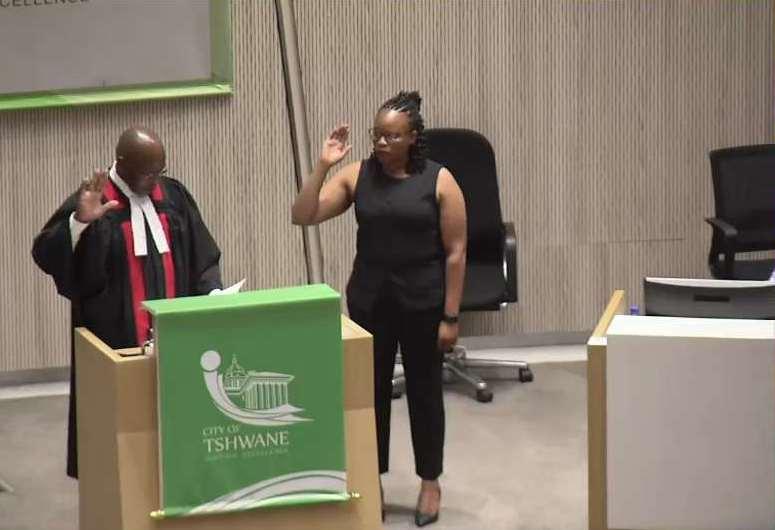
ActionSA’s Dr Nasiphi Moya has been re-elected as the Executive Mayor of the City of Tshwane after defeating Democratic Alliance (DA) candidate Cilliers Brink in the municipality’s first council sitting following South Africa’s 2026 local government elections.
Moya secured 115 votes against Brink’s 87 during the election held on Thursday, November 26, 2026, giving her another opportunity to lead South Africa’s administrative capital.
Her return follows a coalition arrangement involving ActionSA, the African National Congress (ANC), the Economic Freedom Fighters (EFF) and other political parties.
The new council leadership also includes EFF Treasurer-General Omphile Maotwe as deputy mayor and ANC councillor Naeem Patel as speaker.
The result marks an important development in Tshwane’s coalition politics and gives Moya another term to address the city’s financial, infrastructure and service-delivery challenges.
Moya Defeats DA’s Cilliers Brink in Mayoral Election
The mayoral contest took place during the inaugural sitting of Tshwane’s newly elected council at Tshwane House.
Moya defeated former mayor Cilliers Brink, who represented the DA, with a margin of 28 votes.
According to reports, 209 ballots were cast. Moya received 115 votes, Brink secured 87, and seven ballots were declared spoilt.
The outcome confirmed that the coalition supporting Moya had secured enough council votes to retain control of the municipality.
Moya previously became Tshwane mayor in November 2024 after Brink was removed from office through a motion of no confidence.
Her first period in office lasted approximately two years before the 2026 municipal elections brought the new council into place.
Following her re-election, Moya said she was committed to continuing the work already started in the municipality.
She also acknowledged that the next five years would bring challenges, but expressed confidence in Tshwane’s potential and its residents.
ANC’s Naeem Patel Elected Council Speaker
The leadership changes began with the election of the new council speaker.
ANC councillor Naeem Patel secured 119 votes, defeating DA candidate Pogiso Mthimunye, who received 71 votes, and Freedom Front Plus candidate Willie Spies, who received 19.
A total of 209 votes were recorded in the speaker election.
Patel’s victory gave the ANC an important position within the new Tshwane administration and strengthened the political arrangement supporting Moya.
The speaker presides over council proceedings and plays an important role in ensuring that municipal meetings and decision-making processes follow the applicable rules.
The ANC’s position is therefore significant even though ActionSA retained the mayoral office.
EFF’s Omphile Maotwe Becomes Deputy Mayor
The EFF also secured a senior leadership position through the election of its Treasurer-General, Omphile Maotwe, as Tshwane’s deputy mayor.
Maotwe was elected unopposed after being the only candidate nominated for the position.
Her appointment forms part of the coalition arrangement that brought ActionSA, the ANC and the EFF together in the municipality.
ANC councillor April Mabona was also elected unopposed as the council’s chief whip.
The appointments demonstrate how political parties have shared key municipal positions as they work to establish a governing arrangement for the new council.
However, negotiations over the allocation of additional mayoral committee positions were still underway after Moya’s election.
The parties had not yet finalised every portfolio, meaning further discussions would determine how responsibilities would be distributed within the administration.
MK Party Ballots Raise Questions About Coalition Unity
Although the coalition secured the mayoral position, the council vote also exposed some political complications.
Reports indicated that four MK Party ballots were spoilt during the mayoral election.
The development was linked to disagreements surrounding the allocation of senior positions in other Gauteng municipalities, particularly the speaker’s position in Ekurhuleni and the deputy mayor’s position in Johannesburg.
The MK Party had reportedly sought greater representation in the coalition arrangements.
Despite the disagreement, Moya secured enough votes to defeat the DA candidate.
The result showed that the ANC, ActionSA and EFF voting bloc was able to maintain sufficient support for her re-election.
The coalition’s ability to manage disagreements among participating parties will be important as the new administration begins its work.
Water and Electricity Problems Among Moya’s Biggest Challenges
Beyond the political negotiations, the new mayor faces major service-delivery challenges across Tshwane.
Moya has identified infrastructure development, water provision, electricity supply and municipal financial stability as major priorities for her second term.
One pressing concern is the water situation in Bronkhorstspruit, where problems at the wastewater treatment plant were linked to shortages of chlorine and concerns about water safety.
Reports indicated that gastrointestinal illnesses were suspected to have affected approximately 833 people in the community.
The municipality has also faced longstanding concerns about water interruptions, ageing infrastructure and the reliability of electricity services.
Hamanskraal remains another important area requiring attention, particularly regarding access to clean water and the completion of infrastructure projects intended to reduce reliance on emergency water tankers.
Moya said infrastructure development would be a central focus of her administration.
She also emphasised the need to maintain financial stability so the municipality could increase investment in essential services.
Municipal Finances and Service Delivery Will Test the New Administration
Tshwane’s financial position will be another major issue during Moya’s second term.
The mayor has said the municipality needs to strengthen its finances while maintaining the progress made towards producing funded budgets.
A funded budget is important because it helps ensure that municipal spending plans are supported by realistic revenue and financing arrangements.
However, financial stability must also translate into visible improvements for residents.
Communities will expect more reliable water and electricity, better-maintained roads, functioning public infrastructure and improved municipal services.
The new administration will therefore be judged not only by its ability to maintain a coalition but also by its performance in addressing everyday problems affecting households and businesses.
DA Questions Coalition Arrangements Despite Losing Mayoral Vote
The DA’s defeat in the mayoral contest came despite the party’s position as the largest political party in Tshwane following the local elections.
Brink accepted the council’s decision but argued that the DA should have had the opportunity to lead the municipality because of its electoral support.
He also called for the coalition agreement to be made public so residents could understand the political arrangements and commitments behind the new administration.
The request raises an important issue in South Africa’s coalition politics: residents need clarity about how parties distribute leadership positions and agree on policies that will affect municipal governance.
Publishing coalition agreements can help voters understand which parties are responsible for particular decisions and what commitments they have made.
The new administration will also face scrutiny from opposition parties as it implements its priorities.
What Moya’s Re-Election Means for Tshwane Residents
Moya’s return provides Tshwane with continuity in political leadership after a period of coalition negotiations and changes in the municipal council.
Her supporters argue that another term will give the administration more time to complete projects and strengthen the city’s finances.
However, the new mayor must also demonstrate that the coalition can work together despite differences among its political partners.
For residents, the most important questions will concern the availability of clean water, reliable electricity, infrastructure maintenance, employment opportunities and the quality of municipal services.
The appointment of the new mayor, deputy mayor and speaker establishes the leadership structure, but the success of the administration will ultimately depend on its ability to deliver measurable improvements.
Moya now has another opportunity to pursue the plans she began during her first term.
Whether the new coalition can provide stable leadership and improve living conditions across Tshwane will become one of the major tests of South Africa’s post-election municipal politics.