
Abe’s assassin sentenced to life in prison
The gunman charged with killing former Prime Minister Shinzo Abe was sentenced to life in prison on Wednesday, more than three years after the broad-daylight assassination shocked the world.
The slaying forced a reckoning in a country with little experience of gun violence, and ignited scrutiny of alleged ties between prominent conservative lawmakers and a secretive sect, the Unification Church.
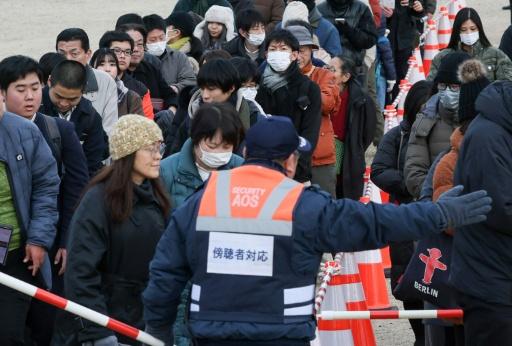
On Wednesday morning a queue of people waited to get tickets to enter the Nara District Court, highlighting intense public interest in the trial.
Tetsuya Yamagami, 45, was convicted of murder and firearms control law violations for using a handmade gun to kill Japan’s longest-serving leader during a campaign speech on July 8, 2022.
As the trial opened in October, Yamagami admitted to murder. Under Japan’s legal system, a trial continues even if a defendant admits guilt.
Manabu Kawashima, a logistics worker who was waiting outside court, said he wanted “to know the truth about Yamagami.”
“What happened to former Prime Minister Abe was the incident of the century. And I liked him while he was alive. His death was shocking,” the 31-year-old said. “I’m here because I wanted to know about the man who killed someone I cared about.”
Prosecutors sought a life sentence for Yamagami, calling the murder “unprecedented in our postwar history” and citing the “extremely serious consequences” it had on society, according to local media.
The Japanese version of life imprisonment leaves open the possibility of parole, although in reality, experts say many die while incarcerated.
At the trial opening, prosecutors argued that the defendant’s motive to kill Abe was rooted in his desire to besmirch the Unification Church.
The months-long trial highlighted how his mother’s blind donations to the church plunged his family into bankruptcy and how he came to believe “influential politicians” were helping the sect thrive.
Abe had spoken at events organized by some of the church groups.
Yamagami “thought if he killed someone as influential as former prime minister Abe, he could draw public attention to the Church and fuel public criticism of it,” a prosecutor told the court in October.
The Unification Church was established in South Korea in 1954, with its members nicknamed “Moonies” after its founder Sun Myung Moon.
In a plea for leniency, Yamagami’s defense team stressed his upbringing had been mired in “religious abuse” stemming from his mother’s extreme faith in the Unification Church.
In despair after the suicide of her husband, and with her other son gravely ill, Yamagami’s mother poured all her assets into the church to “salvage” her family, Yamagami’s lawyer said, adding that her donations eventually snowballed to around 100 million yen ($1 million at the time).
Yamagami was forced to give up pursuing higher education. In 2005, he attempted to take his own life before his brother died by suicide.
Investigations after Abe’s murder led to cascading revelations about close ties between the church and many conservative lawmakers in the ruling Liberal Democratic Party, prompting four ministers to resign.
In 2020, Yamagami began handcrafting a lethal firearm, a process that involved meticulous test-firing sessions in a remote mountainous area.
This pointed to the highly “premeditated” nature of his attack on Abe, prosecutors said.
The assassination was also a wake-up call for a nation which has some of the world’s strictest gun controls.
Gun violence is so rare in Japan that security officials at the scene failed to immediately identify the sound made by the first shot, and came to Abe’s rescue too late, a police report after the attack said.