
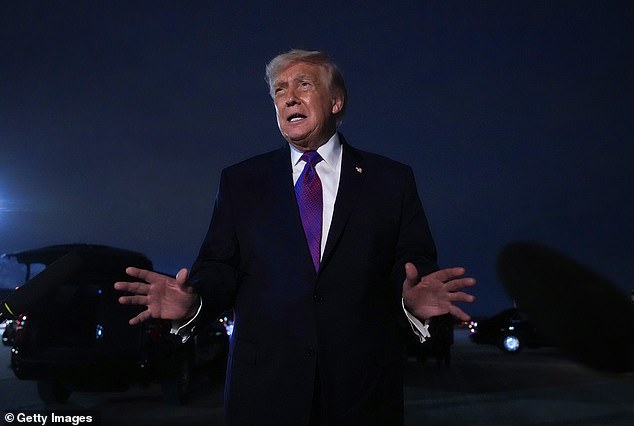
United States President Donald Trump has issued a stark warning to Oman, threatening direct military action should the Gulf nation forge a strategic alliance with Iran to exert joint control over the Strait of Hormuz — one of the world’s most consequential maritime passages.
Trump delivered the warning in pointed terms during a high-profile cabinet meeting on Wednesday, declaring that the strategic waterway must remain open to international navigation. Any attempt to restrict global shipping through the strait, he cautioned, would trigger an immediate military response from American forces.
The remarks have sharply elevated geopolitical tensions in an already volatile region, with significant consequences for global energy markets — and few countries stand more exposed to the fallout than Nigeria.
The Strait of Hormuz serves as the jugular vein of global oil supply, with roughly one-fifth of the world’s daily petroleum consumption transiting its narrow corridors. A military confrontation in the Persian Gulf would send seismic shocks through global crude oil supply chains, with cascading effects on oil-dependent economies like Nigeria’s, where petroleum revenues remain the primary pillar of government finances and foreign exchange earnings.
Should hostilities materialise, the disruption to oil flows through the strait could trigger sharp swings in global crude prices — a double-edged reality for Nigeria, which simultaneously depends on oil exports for fiscal survival while remaining deeply vulnerable to the broader economic instability that any Gulf conflict would unleash.