
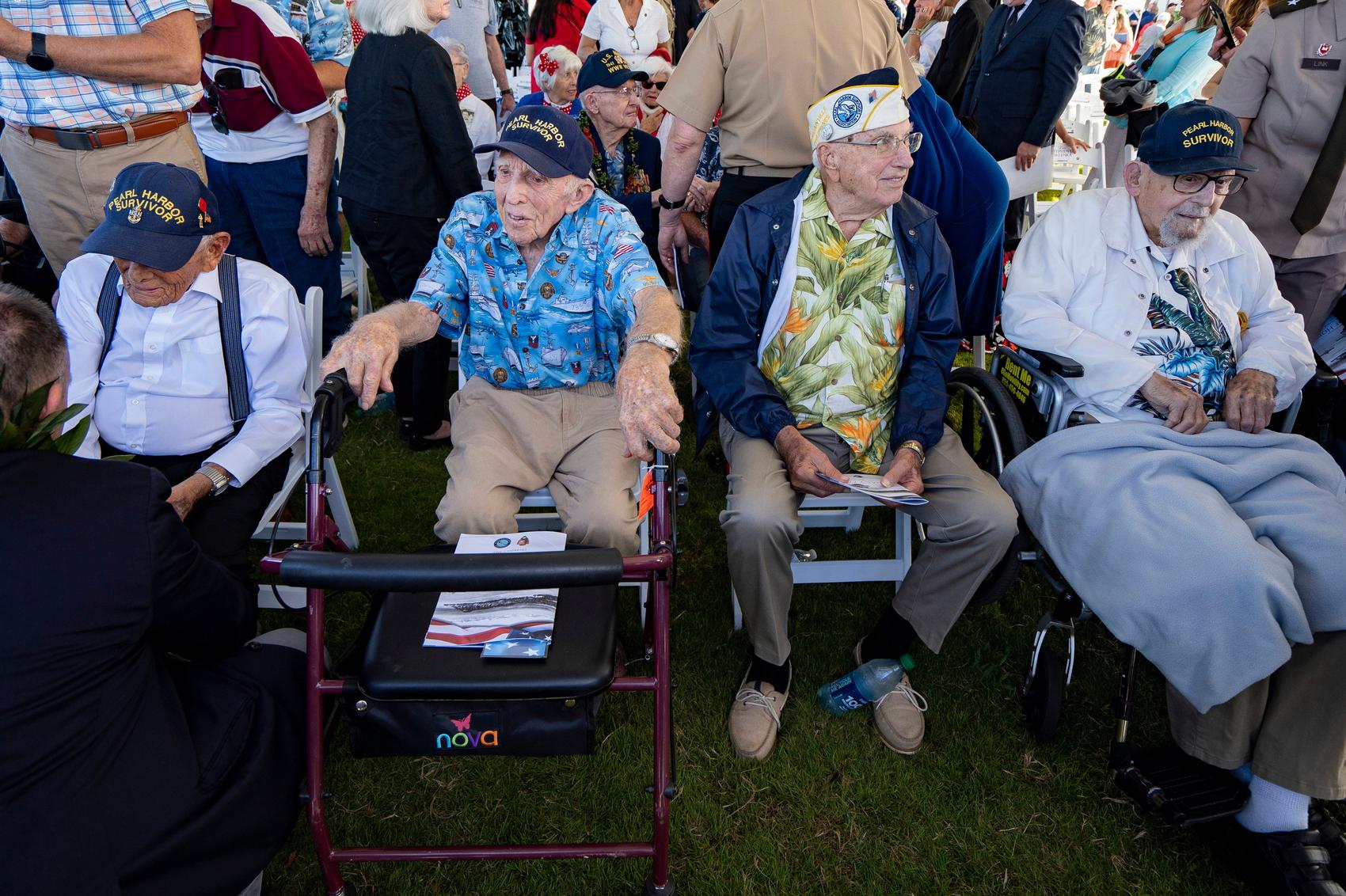
Soon no Pearl Harbor survivors will be alive. People turn to other ways to learn about bombing
HONOLULUE – Every year on the shoreline of the military installation, survivors of the Japanese bombing of Pearl Harbor in 1941 are the focus of a commemorative service.
However, only 12 people—all centenarians—remain alive today, and none of them can go to Hawaii on Sunday to commemorate the occasion this year.
As a result, none of the attendees will have personal recollections of serving during the assault, which resulted in the deaths of over 2,300 soldiers and launched the United States into World War 2.
The development is a continuation of an ongoing trend and is not surprising. As survivors’ numbers decline, the public and their descendants are increasingly looking for alternative sources of information about the attack.
Kimberlee Heinrichs, whose 105-year-old father Ira “Ike” Schab had to cancel plans to fly in from Oregon due to illness, stated, “The idea of not having a survivor there for the first time—I just, I don’t know — it hurt my heart in a way I can’t describe.”
With the exception of 2020, when the Navy and the National Park Service prohibited the public from attending due to health hazards associated with the coronavirus epidemic, survivors have been there every year in recent memory.
At 7:55 a.m., when the attack started on December 7, 1941, the ceremony starts with a moment of silence. Then come solemn rites.
Fighter jets fly overhead in “missing man formation,” in which one jet peels off to symbolize those lost. Survivors present wreaths to honor the dead, though active duty troops have assumed this job in recent years. Survivors rise to salute active duty sailors who themselves salute as their ship passes the USS Arizona Memorial, which sits above submerged hull of the battleship sunk in the attack.
80% are online. They are part of the library’s Veterans History Project of firsthand recollections of veterans who served in World War I onward. Many were recorded by relatives, Eagle Scouts and other amateurs interested in documenting history.
The Sons and Daughters of Pearl Harbor Survivors gives presentations in schools and marches in parades to share the stories of their families. The California chapter has added six new members this year, including two great-grandchildren of survivors.
“When they’re all gone, we’re still going to be here,” said Deidre Kelley, the group’s president. “And it’s our intent to keep the memory alive as long as we’re alive.”