
Soludo Warns Politicians Against Church Campaigns

Soludo Warns Politicians Against Church Campaigns as Old APGA Video Resurfaces – INTRO
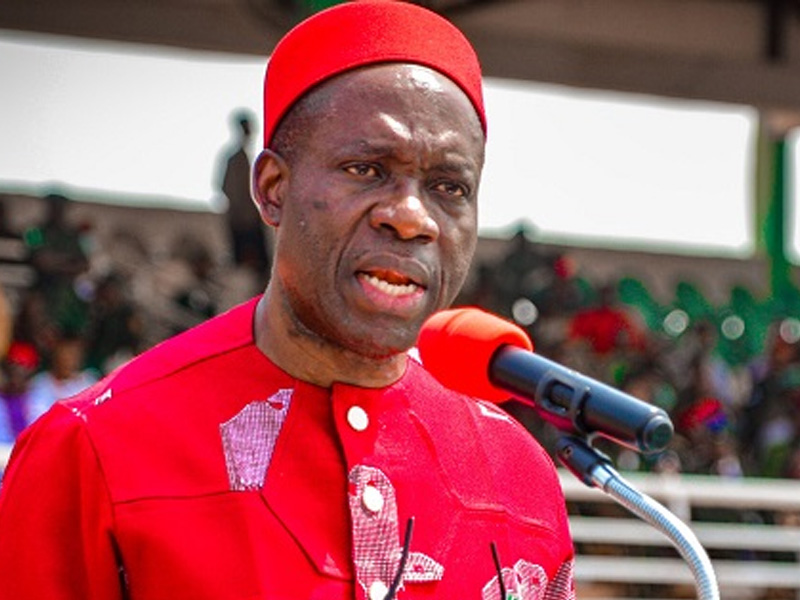
Anambra State Governor, Chukwuma Soludo, has cautioned politicians against using churches and other places of worship for political campaigns, saying religious centres should remain places where people can worship without partisan pressure.
The governor made the remarks on Sunday, November 15, during a visit to the Mountain of Holy Ghost Intervention and Deliverance Ministry in Onitsha, Anambra State, where he joined worshippers to celebrate the church’s 30th anniversary.
The ministry was founded by Prophet Chukwuemeka Ohanaemere, popularly known as Odumeje.
Speaking to the congregation, Soludo said politicians should keep campaign activities away from religious gatherings and use appropriate venues for political engagements.
He argued that places of worship should welcome people regardless of their political affiliations and should not become platforms for promoting candidates or political parties.
According to reports of his address, the governor said he deliberately avoided campaigning in churches during the six months preceding his last governorship election.
He also explained that his visits to religious institutions were connected to his responsibility to engage with people of different religious backgrounds and promote peaceful coexistence.
Old APGA-branded church video draws attention
Soludo’s comments have attracted additional attention following reports that an old video showing him wearing an apron bearing the colours and logo of the All Progressives Grand Alliance (APGA) inside a church has resurfaced online.
The footage reportedly dates back to 2021 and began circulating after the governor’s remarks about keeping political activities out of churches.
The development has prompted online questions about the distinction between attending a religious gathering, participating in a church activity and using a place of worship to campaign for political support.
However, the circumstances surrounding the old footage, including its full context and the activity taking place, should be established before drawing conclusions about the governor’s position.
What Nigeria’s Electoral Act says
The debate also has a legal dimension.
Section 96(3) of Nigeria’s Electoral Act 2026 prohibits the use of designated places of religious worship, police stations and public offices for political campaigns, rallies and processions.
The provision also prohibits using those locations to promote or attack political parties, candidates or their programmes and ideologies.
This makes the distinction between ordinary political discussion and organised campaign activity in religious spaces particularly important as political mobilisation ahead of the 2027 general elections gathers momentum.
Soludo’s visit to Odumeje’s ministry
Beyond the political remarks, the governor congratulated Odumeje on the ministry’s 30th anniversary and acknowledged its charitable activities and contributions to the community.
Soludo recalled that his first encounter with the ministry followed the state government’s demolition of part of its structure to facilitate drainage work around the Sakamori drainage channel.
He also commended the cleric’s advocacy against criminal activities carried out under the guise of traditional spiritual practices.
The governor further announced state support for the ministry’s youth empowerment programmes, linking the proposed intervention to his administration’s One Youth, Two Skills initiative.
CONCLUSION – 2027 election season raises questions about religious influence
Soludo’s warning comes as political activities and discussions surrounding the 2027 general elections continue to intensify.
Religious institutions have historically played visible roles in Nigeria’s public life, with politicians frequently attending worship services and seeking engagement with influential religious leaders.
The governor’s remarks have therefore renewed discussion about how political leaders can engage religious communities without turning worship centres into campaign venues.
Whether other political leaders will adopt a similar position remains to be seen.