
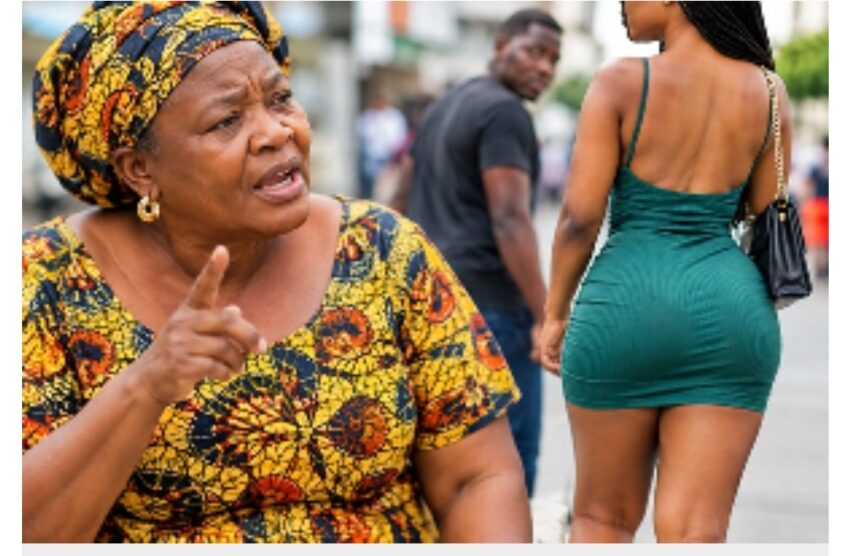
A 61-year-old Nigerian woman, Doyinsola Ilori, has drawn attention online after questioning why women who dress provocatively would expect men not to be sexually aroused by their appearance.
In a post on Facebook, Ilori said she could not understand the argument that a man has no right to an erection when a woman is dressed in a revealing way. “I do not understand how a woman will be half naked, provocatively dressed and tell me the man does not have a right to have an erection,” she wrote.
“One of the most confusing things”
Ilori described the issue as one of the most confusing she has had to deal with in her life. She invited social media users to explain the opposing argument to her. “If you can, please make it make sense to me,” she wrote.
She ended the post with two Yoruba expressions, “Kò yé mi”, meaning “I don’t understand”, and “Ọlọ́run ń gbọ́”, which translates roughly as “God is listening”.
The post, first reported by mynewsgh.com, did not refer to any specific incident or person. It offered her personal view on a subject that regularly resurfaces in public conversation in Nigeria, Ghana and elsewhere.
A long-running debate
Discussion about clothing, modesty and male behaviour tends to draw sharp reactions, and responses to posts like Ilori’s often fall along familiar lines.
Some people argue that dressing modestly is a matter of personal responsibility and cultural values, and that revealing clothes invite attention that some wearers may not want to deal with. Supporters of this view often point to what they see as the importance of discretion in public spaces, particularly among young people.
Others push back strongly. They argue that physical arousal is a natural reaction that men are fully able to control, and that it does not amount to a right to touch, harass or pressure anyone. In their view, what a person wears is never an invitation or an excuse for unwanted attention or sexual violence. Women’s rights groups and many legal experts take this position, noting that responsibility for harassment and assault lies with the perpetrator alone.
Why the framing matters
Much of the disagreement turns on what is actually being asked. Ilori’s question, as she put it, concerns whether a man has a “right” to arousal. Critics of the way the debate is usually framed say the real issue is not involuntary physical reactions but behaviour: what a person does next, and whether other people’s choices and boundaries are respected.
That distinction is central to how laws on harassment and sexual offences are written. In Nigeria and in most jurisdictions, consent and conduct are the legal test, not clothing or appearance.
Limits of the post
It is worth noting that the post itself is short and expresses a personal opinion rather than citing research or reporting on an event. It does not say who prompted the question, nor does it say that Ilori was responding to a particular argument or incident.
As of the time of the report, there was no indication that she had added to her comments or clarified her position, and the reaction from social media users was not detailed in the source material.
What the post does show is how readily questions about dress and behaviour generate strong feeling online, and how often they reopen a discussion that has run for years without a settled consensus. For many readers, the post is likely to prompt the kind of explanation Ilori asked for. Whether those answers satisfy her, or anyone else, remains to be seen.