
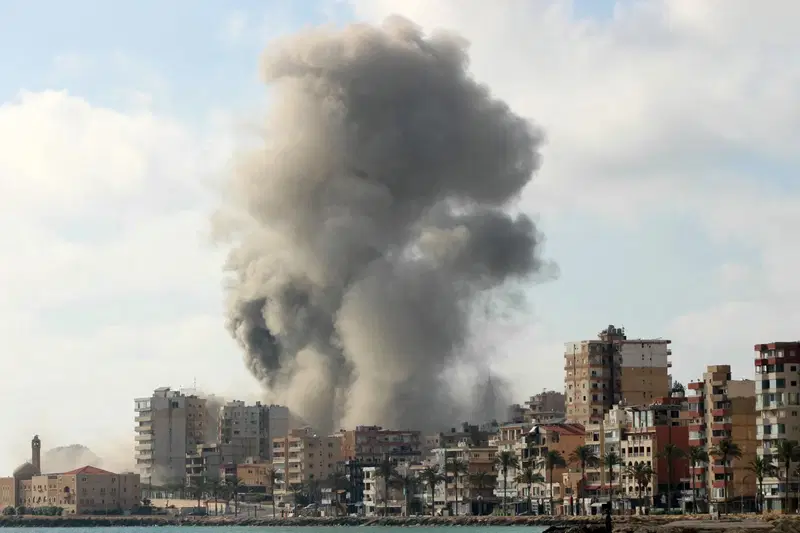
The US-Iran conflict entered a volatile new phase on Thursday, with fighting spreading into the Red Sea, oil prices spiking, lawmakers moving to rein in presidential war powers, and fresh attacks reported across the region. Here is a full breakdown of the day’s developments.
Houthis strike Saudi tankers, widening the conflict
Yemen’s Iran-backed Houthi rebels said they attacked two Saudi oil tankers, identified as the Encelia and the Layla, in the Red Sea early Thursday, with a Houthi military spokesperson saying the vessels were targeted “for their violation of the blockade decision issued by the armed forces.” Saudi state media confirmed the Encelia had been hit, according to an official at the kingdom’s Transport General Authority. The strikes came as the US military carried out a 12th consecutive night of strikes against Iran, with diplomatic efforts showing dwindling progress. globalnewsCNBC
The attack marks a significant escalation: the Institute for the Study of War reported that at least seven vessels had already changed course to avoid the Bab el-Mandeb Strait in light of the Houthi blockade on Saudi ports — a chokepoint linking the Red Sea to the Gulf of Aden and global markets. Washington Times
President Trump warned that the US would hold Tehran accountable for any further Houthi attacks in the Strait of Hormuz, cautioning of “major military punishment” should the group strike again. Secretary of State Marco Rubio was more pointed in his assessment of the Houthis’ motives, telling reporters in Manila that the group had “largely been smart and stayed out of all this throughout the conflict,” but had since “gotten themselves suckered into this, going after Saudi Arabia and their ships.” Rubio added that he hoped the group would de-escalate, saying they had been “snookered… by the Iranians.” AL-Monitor
Oil tops $100 a barrel, US gas prices climb
Global oil prices climbed toward and briefly above $100 a barrel as concerns deepened over the security of crude flows from the region, with average US gas prices rising to $4.09. Compounding the pressure on energy markets, a major shipping insurance trade group announced that insurers can cancel policies for vessels that pay tolls to Iran or any other country to transit the Strait of Hormuz — a chokepoint through which roughly a fifth of the world’s oil and gas passed in peacetime.
Congress pushes back on Trump’s war powers
The US House of Representatives voted 214–208 to halt the Iran conflict absent congressional approval, with four Republicans joining Democrats in backing the measure, brought by Rep. Pramila Jayapal. It was the second time the House has voted to check the president’s war-making authority, and the first since a ceasefire memorandum of understanding between the US and Iran collapsed. The Senate is expected to consider a similar resolution soon, though even passage there would not legally compel the administration to end the war, since concurrent resolutions carry no force of law. The vote nonetheless reflects growing, if still limited, Republican discontent with the continuing conflict.
Fighting reported in Jordan, Kuwait and at the Iraq-Iran border
The conflict’s reach extended further on Thursday. Jordan and Kuwait each reported fresh Iranian attacks targeting sites within their countries, with Kuwait’s military saying drones struck its border crossing with Iraq, causing damage but no reported casualties. Separately, Iranian state media reported that US strikes killed two people at an Iraq-Iran border crossing.
Diplomatic reaction
Iran’s Foreign Ministry pushed back sharply against Trump’s threats to strike civilian infrastructure, with spokesperson Esmaeil Baghaei accusing Washington of sacrificing international humanitarian law “to its insatiable appetite for war.” Regional actors also weighed in: Pakistan’s government condemned the tanker attacks and urged both Washington and Tehran to show restraint, while Gulf diplomats were described as increasingly pessimistic about finding a diplomatic off-ramp.