
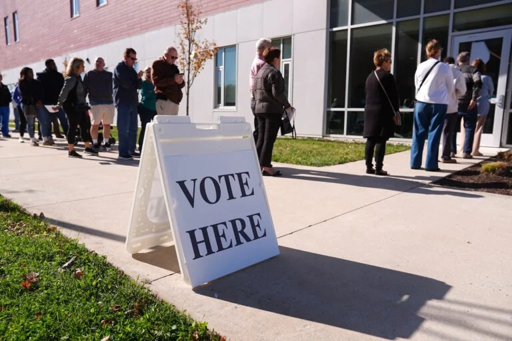
Millions of South Africans are voting on Wednesday, November 4, in local government elections that will determine who controls the country’s municipalities for the next five years. The vote is the first municipal poll since the African National Congress lost its national majority in 2024, and it could reshape political power in several major cities.
A record 29.2 million voters are registered for the election. The Electoral Commission of South Africa said it had prepared 23,696 voting stations nationwide, staffed by 188,000 officials. Voting stations opened at 07:00 and will close at 21:00, with the day declared a public holiday to encourage participation.
The contest is exceptionally broad. A total of 136,790 candidates from 546 political parties are competing for 10,526 council seats across eight metropolitan municipalities, 44 district municipalities, and 205 local municipalities.gov+1
Voters will elect councillors who will, in turn, choose mayors and form municipal administrations. Because outright majorities are not guaranteed in several major cities, the results could trigger fresh coalition negotiations among national and regional parties.
The election is taking place amid public frustration over failing infrastructure, unreliable water supplies, unemployment, inequality, and poor municipal services. Those pressures have made local service delivery a central issue, particularly in large metros where opposition parties hope to make gains.
The Democratic Alliance is campaigning to expand its municipal footprint. Its leader, Geordin Hill-Lewis, predicted shortly before polling day that the party could increase its number of councils from 27 to about 60. The uMkhonto weSizwe Party is also contesting local elections for the first time.
Political analysts say turnout may fall below 50 percent, which could affect the ANC’s performance. Oxford Economics Africa senior political analyst Louw Nel told IOL that polling suggested the ANC and DA could finish within six or seven percentage points of each other nationally, or possibly closer.
The election follows a two-day special voting period on November 2 and 3 for approved voters unable to attend a polling station on election day, including those with disabilities or infirmities. The Electoral Commission said 1,425,942 special votes were cast across the two days.
Voters must cast their ballots at the station where they are registered and present an acceptable identity document: a smart ID card, green barcoded ID book, or valid temporary identity certificate. In local municipalities, many voters will receive three ballots—one for a ward councillor, one for a party list in the local council, and one for party representation on the district council.
The results are expected to provide an important measure of the national political mood ahead of South Africa’s next general election in 2029. Final outcomes are anticipated by Sunday, after which parties may begin negotiations to form governing coalitions in municipalities where no single party wins a majority.