
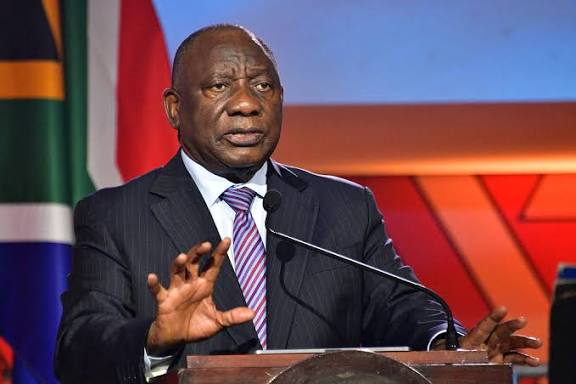
Cyril Ramaphosa cautions against making unfounded accusations that white persecution is endangering South Africa’s independence.
South Africa’s unity and sovereignty are directly threatened by the mounting foreign allegations that white Afrikaners are being persecuted there, according to President Cyril Ramaphosa.
Speaking on Monday at the ANC’s National General Council (NGC) in Boksburg, Ramaphosa claimed that both foreign players eager to legitimize misinformation for political purposes and domestic factions invested in racial privilege are undermining the nation’s democratic agenda. “South Africans of all races have a strong sense of shared nationhood,” he stated.
However, some in our society still adhere to notions of racial superiority and seek to maintain racial privilege.
“Their vehement opposition to transformation aligns conveniently with wider notions of white victimhood, fed by false claims of persecution of white Afrikaners.”
Ramaphosa said these narratives, amplified abroad by lobby groups and foreign politicians, were not merely ideological disputes, but active threats to national stability.
“The propagation of these false claims has real implications for our sovereignty, international relations and national security,” he warned.
“It is essential that we counter this narrative through frank engagement and broad social mobilisation for a vision of non-racialism, reconciliation and transformation.”
The president’s remarks come as relations between Pretoria and Washington reach their lowest point in decades.
Since beginning his second term in January, US President Donald Trump has repeatedly claimed, without evidence, that South Africa’s government was forcibly taking land and encouraging violence against white farmers, especially Afrikaners.
His claims echo presentations made in the US by civil society groups including AfriForum and the Solidarity Movement, which allege systematic targeting of white citizens.
Diplomatic tensions escalated further last month when the US boycotted the G20 leaders’ summit hosted in Johannesburg, arguing that no consensus could be reached without its participation.
South Africa went ahead, producing a final communique prioritising climate action and gender equality, themes the Trump administration has openly rejected.
In a rare diplomatic snub, Washington has since invited Poland, not South Africa, to the opening meetings of its 2026 G20 presidency.
US Secretary of State Marco Rubio defended the shift, accusing Pretoria of harbouring “an appetite for racism” and tolerating violence against Afrikaners — claims South Africa dismisses as baseless.
With uncertainty now looming over South Africa’s participation in the 2026 G20 cycle, Ramaphosa said the country must confront disinformation head-on.