
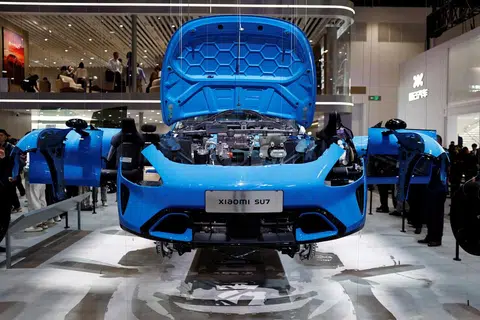
A Chinese blogger has been given 20 months in prison for fabricating negative claims about the safety of Xiaomi’s SU7 electric sedan, state media reported on July 17.
Since 2025, the authorities have stepped up efforts to curb false advertising, online misinformation and other irregular practices in the fiercely competitive auto industry amid concerns that misleading claims could distort consumer perceptions and competition.
Bloggers and online platforms accused of smearing automakers or spreading misleading information have been targeted.
The blogger, identified as Gao, was found guilty by the Haidian District People’s Court of damaging the reputation of goods by fabricating false facts and intentionally harming the reputation of car maker Xiaomi, the Beijing Daily reported.
He was also fined 100,000 yuan (S$19,800).
In August 2024, Gao and his team released a crash-test video appearing to show that the doors of Xiaomi’s best-selling SU7 failed to open after a collision.
The video appeared to show that the vehicle’s emergency call system did not activate and its central control screen failed to light up, according to Chinese media reports
The clip, posted on Gao’s video-sharing account with about 1 million followers, went viral, drawing roughly 3 million views.
The court found that Gao and his team covertly tampered with the vehicle’s auxiliary battery before filming and used footage of a battery damaged by a forklift to mislead viewers, the Beijing Daily report said.
In January 2025, Xiaomi said “a blogger and his accomplices who previously maliciously smeared Xiaomi Auto have been arrested according to law”.