
The Chinese and Russian navies conducted live-fire drills within Japan’s exclusive economic zone (EEZ) over the weekend, Japanese Defense Minister Shinjiro Koizumi has disclosed, underscoring deepening military cooperation between Beijing and Moscow.
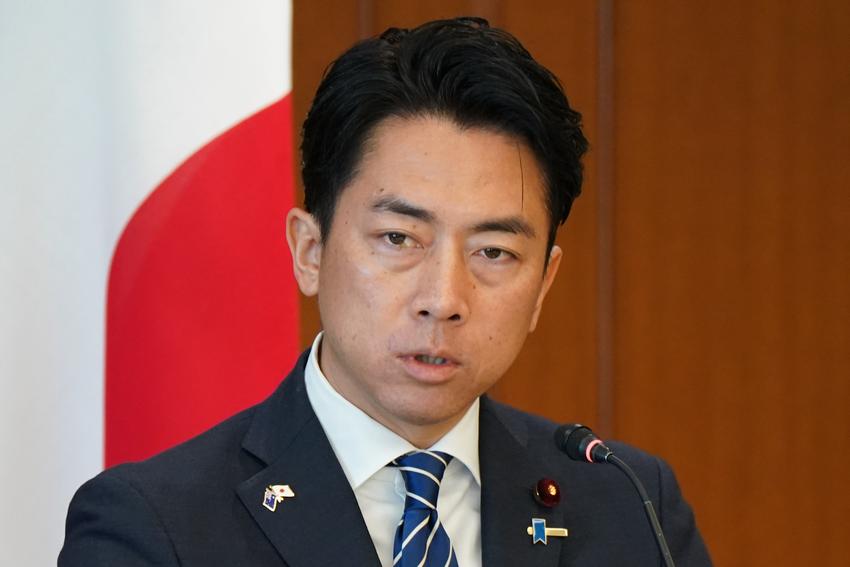
Koizumi revealed the development on Monday during a keynote address at an international airshow in Farnborough, southern Britain, where he also signalled Japan’s readiness to strengthen its defense production capacity.
According to the Japanese Defense Ministry, a Chinese navy guided-missile destroyer carried out a firing drill involving a machine gun on Sunday within Japan’s EEZ in the Pacific, about 180 kilometres southwest of Okinotori, Japan’s southernmost island.
The vessel was part of a group of Chinese and Russian warships earlier observed sailing about 330 kilometres southwest of the island at around 2 a.m. The ministry said three Chinese warships and one Russian frigate had jointly navigated the waters between Okinawa’s main island and Miyako Island toward the Pacific on Thursday.
It marked the first time the ministry has detected a live-fire drill by the Chinese military within Japan’s EEZ and made the incident public. No damage to other vessels in the area has been reported.
Tokyo, however, has conveyed its concern to Beijing through diplomatic channels, warning that such drills could endanger ships navigating nearby waters, the ministry said.
The ministry also released images purporting to show the drill in progress, adding that a destroyer from Japan’s Maritime Self-Defense Force had monitored the Chinese and Russian warships closely.
China and Russia have in recent times stepped up military coordination, including joint bomber flights over waters around Japan. Referencing these episodes, along with a submarine-launched ballistic missile test conducted by the Chinese military earlier this month, Koizumi said: “Each of these is yet another manifestation of the deepening military cooperation between China and Russia.”
He added that the security of the Indo-Pacific region is inseparable from that of Atlantic Europe, and that Japan sees itself playing a role in bridging the two.
In his speech, Koizumi also disclosed that Japan will formulate a Defense Production and Technology Base Strategy to outline the medium- to long-term direction of its defense industry, as the government works to revise key national security policy documents by the end of the year.
The minister pledged that Japan would ensure sufficient production capacity to supply defense equipment even in the event of a prolonged contingency. He also highlighted recent revisions to Japan’s weapons export policy, which now permit the transfer, in principle, of all categories of defense assets, including fighter jets and destroyers.
“Defense industry can no longer be completed by one country alone,” Koizumi said, adding that Japan considers it indispensable to cooperate with European partners possessing “exquisite technologies” in order to “bring together each other’s strengths” and build resilient supply chains.
Koizumi attended the airshow as Japan, Britain and Italy continue work on developing a next-generation fighter jet under the multinational Global Combat Air Program.