
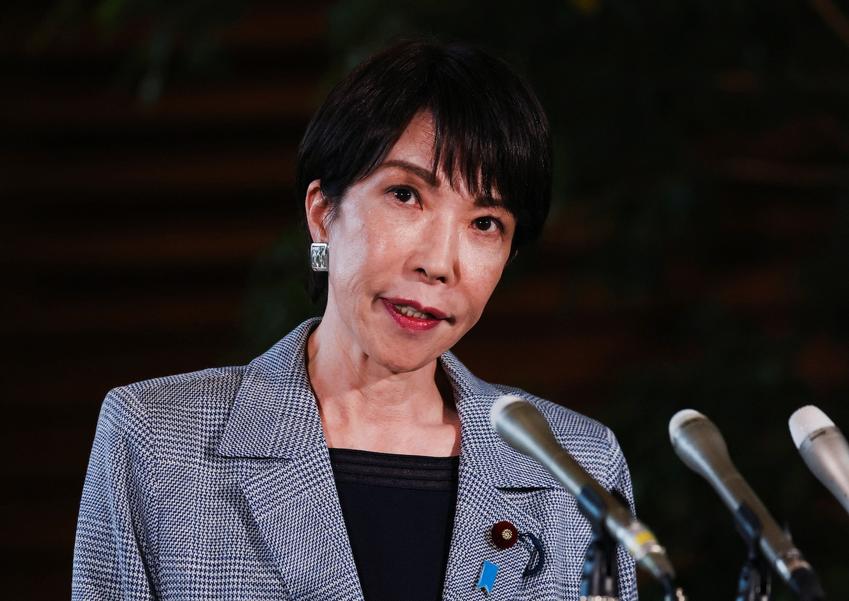
Takaichi claims that during a phone conversation regarding China, Trump said, “Call me anytime.”
In their first phone conversation since Tokyo’s leader caused a significant diplomatic spat with China, Japanese Prime Minister Sanae Takaichi claimed to have gotten the message “Call me anytime” from U.S. President Donald Trump on Tuesday.
Beijing reacted angrily to Takaichi’s spontaneous statement in parliament earlier this month that a hypothetical Chinese attack on Taiwan might result in Japanese military action, which included a boycott of travel to Japan.
China has not ruled out using force to seize Taiwan, which is located just over 100 kilometers from Japanese territory. Beijing’s claim is denied by the island’s administration, which asserts that only Taiwanese citizens have the power to determine their own destiny.
Trump has not commented publicly on the dispute between Japan — a key U.S. security ally – and rival superpower China, a silence that analysts say will be concerning to some officials in Tokyo.
In brief remarks following her call with Trump on Tuesday, Takaichi sought to dispel any concerns that the U.S. president did not have her back.
“President Trump mentioned that he and I are extremely good friends, and that I should call him anytime,” Takaichi told reporters.
Trump explained to Takaichi the recent state of U.S.-China relations including his phone call with Chinese President Xi Jinping on Monday, she added.
Xi told Trump in that call that Taiwan’s “return to China” is a key part of Beijing’s vision for the world order, China’s official Xinhua news agency reported.
Trump touted progress in trade talks and said relations with China were “extremely strong” in a post on Truth Social following his call with Xi. He made no mention of any discussions on Taiwan, however.
The White House did not immediately respond to a request for comment about Trump’s call with Takaichi.
‘RETURN’ NOT AN OPTION
Taiwan Premier Cho Jung-tai said on Tuesday that for the island’s 23 million people a “return” to China is not an option.
Japan’s Chief Cabinet Secretary Minoru Kihara told reporters on Tuesday that stable U.S.-China relations were “extremely important for the international community, including Japan.”
He declined to comment on Xi’s reported remarks to Trump about Taiwan, which is surrounded by waters that provide a vital sea route for trade in goods and energy that Tokyo depends on.
Encouraged by the U.S., Japan has in recent years embarked on a historic military build-up to counter Beijing’s growing might and assertiveness in the region.
Earlier on Monday, Beijing criticized Tokyo’s plan to deploy a medium-range surface-to-air missile unit to Yonaguni, its island closest to Taiwan, calling it an attempt to “create regional tension and provoke military confrontation.”
Japan scrambled a fighter jet after it detected a Chinese drone flying between Yonaguni and Taiwan on Monday.
While Takaichi has so far declined to acquiesce to Beijing’s demands to retract her remarks on Taiwan, Tokyo has said it is willing to hold talks with Beijing at all levels to tamp down tensions.
Japan’s vice foreign minister met with China’s ambassador in Tokyo on Tuesday to discuss pending issues between the two countries and future responses, local media reported.
Beijing, however, ruled out a potential icebreaker meeting between Takaichi and Chinese Premier Li Qiang on the sidelines of last weekend’s G20 meeting in South Africa.
Analysts say that is one of several signals that Japan-China relations could be headed for a long winter under Takaichi, a hardline nationalist who has enjoyed strong public approval ratings since she came to power last month.