
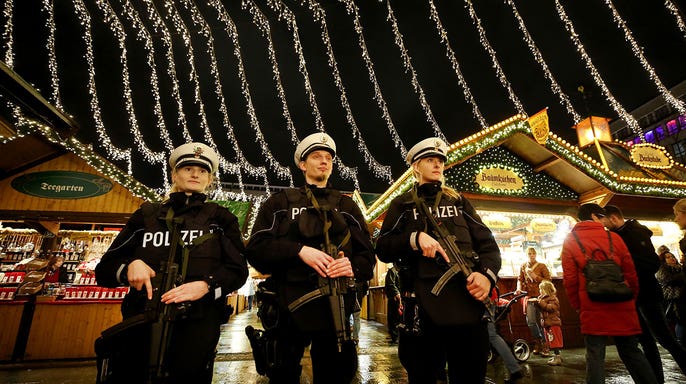
European Christmas markets fortify security measures as terror threats force major operational changes
In response to what officials in Germany, France, and other regions of Europe see as greater dangers to public safety, European Christmas markets are opening this year under increased security and operating costs.
According to a recent survey by the Federal Association of City and Town Marketing, spending on security for public events, such as Christmas markets, has risen by almost 44% in Germany over the previous three years.
This season, Berlin’s major market opened with more private security, improved video surveillance, and concrete barricades. A number of smaller towns caution that they might have to reduce or cancel markets the next year due to the additional restrictions.
The requirements have become increasingly stringent,” David Russ, head of production at Berlin’s Gendarmenmarkt, told Reuters. The heightened measures, he said, allow visitors to feel secure: “I can just let go of everything here — I feel safe.”
While many towns receive some public funding to operate holiday markets, smaller municipalities and private organizers often shoulder most of the expense. Local officials have begun calling on Germany’s 16 federal states to take on a larger share of the financial burden, arguing that counter-terrorism measures extend beyond the responsibility of local event planners.
The upgrades follow last December’s SUV attack at the Magdeburg Christmas market, which killed six people and injured more than 300. Since then, many German cities have reinforced infrastructure, revised crowd-control plans, and increased surveillance at large seasonal gatherings.
France has moved in a similar direction. Authorities canceled the annual New Year’s Eve concert on the Champs-Élysées after police raised concerns about crowd management and what the Interior Ministry described as a “very high” terror threat level. The ministry has classified Christmas markets and other winter festivities as “high-risk” events, prompting cities to deploy additional officers, introduce new screening points and impose access restrictions where needed.
“The real question is why European governments are tolerating a situation where they must deploy extraordinary security just so people can safely celebrate a tradition that has been central to European life for centuries,” Alan Mendoza, executive director of the Henry Jackson Society told Fox News Digital. “They’re responding to the threat, but they’re not pushing back against the radical extremists causing it. Why are Europeans forced to navigate layers of security instead of authorities making life difficult for the people who are spreading hatred and posing the threat?”