
South Africa not invited to first G20 meeting in US this month
Although at least one other G20 member believes it should, South Africa is unlikely to attempt to gatecrash the first G20 summit under the US G20 presidency this month.
All G20 countries, with the exception of South Africa, received invitations from the US on Monday to attend the first sherpas’ meeting of the US G20 presidency, which will take place in Washington on December 15 and 16.
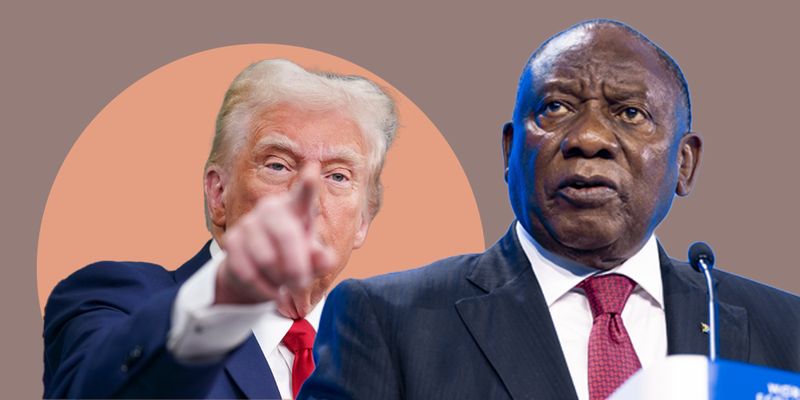
This non-invitation from the US to SA verified US President Donald Trump’s decision last week that he would not invite South Africa to the G20 Leaders’ Summit he will convene in Miami in December 2026.
In his announcement on his social media site, Truth Social, he repeated his false claim that the US had not attended the G20 in South Africa, which has just ended, because of “the horrific human right abuses endured by Afrikaners…”
He added that because SA had refused to hand over the G20 presidency to the acting US ambassador at the Johannesburg summit on 23 November, “South Africa will NOT be receiving an invitation to the 2026 G20, which will be hosted in the Great City of Miami, Florida next year.”
President Cyril Ramaphosa refused to hand over the G20 presidency to the acting ambassador, a relatively junior official. A few days later, officials from the Department of International Relations and Cooperation (Dirco) handed over the G20 presidency to acting US ambassador Marc Dillard at Dirco’s headquarters.
US flexes as it takes over presidency from South Africa
In a State Department statement, the United States officially took over as G20 president in 2026 and promised to “return the G20 to focusing on its core mission of driving economic growth and prosperity to produce results.”
The US presidential plan for 2026 will place a high priority on reducing regulatory burdens, safeguarding energy supply chains, and promoting technological innovation.
The US presidency takes place amid exceptionally severe diplomatic friction with South Africa — and a highly unusual transition of the G20 presidency. Instead of giving the G20 leadership to a junior US diplomat at the 2025 summit in Johannesburg, the departing South African administration arranged a low-key handover at Dirco offices in Pretoria.
Prior to the summit, South Africa had said unequivocally that it would not accept a chargé d’affaires, the lowest-level diplomatic official, as the recipient of the presidency. Instead, it insisted that the transfer be made to a head of state, a minister, or a senior envoy.
The summit continued without full US representation. South Africa responded by advancing the summit’s objectives under the guise of sustainability, equality, and solidarity.
However, the procedural break — handing over the G20 presidency outside the summit — highlights the depth of the diplomatic rift between Pretoria and Washington. It comes in the wake of other disputes, from the 2023 controversy over alleged arms transfers linked to a Russian vessel, to Washington’s discomfort with Pretoria’s growing alignment with Russia and China, and South Africa’s Global South-oriented agenda on economic justice and sustainable development.