
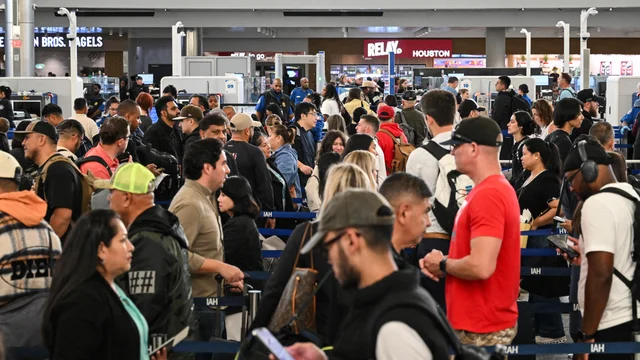
FAA Lifts Emergency Flight Restrictions at 40 Major U.S. Airports, Airlines Resume Normal Operations
The Federal Aviation Administration said Sunday it is lifting all restrictions on commercial flights that were imposed at 40 major airports during the country’s longest government shutdown.
Airlines can resume their regular flight schedules beginning Monday at 6 a.m. EST, the agency said.
The announcement was made in a joint statement by Transportation Secretary Sean P. Duffy and FAA Administrator Bryan Bedford.
Citing safety concerns as staffing shortages grew at air traffic control facilities during the shutdown, the FAA issued an unprecedented order to limit traffic in the skies. It had been in place since Nov. 7, affecting thousands of flights across the country.
Impacted airports included large hubs in New York, Chicago, Los Angeles and Atlanta.
The flight cuts started at 4% and later grew to 6% before the FAA on Friday rolled the restrictions back to 3%, citing continued improvements in air traffic controller staffing since the record 43-day shutdown ended on Nov. 12.
The number of flights canceled this weekend was at its lowest point since the order took effect and was well below the 3% cuts FAA was requiring for Saturday and Sunday. Data from aviation analytics firm Cirium showed that less than 1% of all flights were canceled this weekend. The flight tracking website FlightAware said 149 flights were cut Sunday and 315 were canceled on Saturday.
The FAA statement said an agency safety team recommended the order be rescinded after “detailed reviews of safety trends and the steady decline of staffing-trigger events in air traffic control facilities.”
The lifted restrictions mean:
-
Airlines can resume regular flight schedules at all affected airports.
-
Limits on general aviation, visual flight rule approaches, commercial space launches, parachute operations, and photo missions near affected facilities will also end.
-
The FAA will continue to monitor the National Airspace System closely to ensure safety and operational efficiency.
The FAA cautioned that safety remains the top priority and is reviewing enforcement actions against airlines that violated the flight cut orders during the shutdown. The mitigation of these restrictions signals a return to more predictable air travel and alleviates concerns raised about close aircraft proximities and runway incursions seen earlier during the shutdown.
The 40 impacted airports include major hubs such as Hartsfield-Jackson Atlanta, Boston Logan, Chicago O’Hare, Los Angeles International, New York JFK and LaGuardia, Dallas/Fort Worth, Denver International, Miami International, and San Francisco International among others.
This development marks a critical step in restoring normal air traffic operations across the country, benefitting millions of travelers and the aviation industry at large as the nation moves past one of the longest government shutdowns in history.