
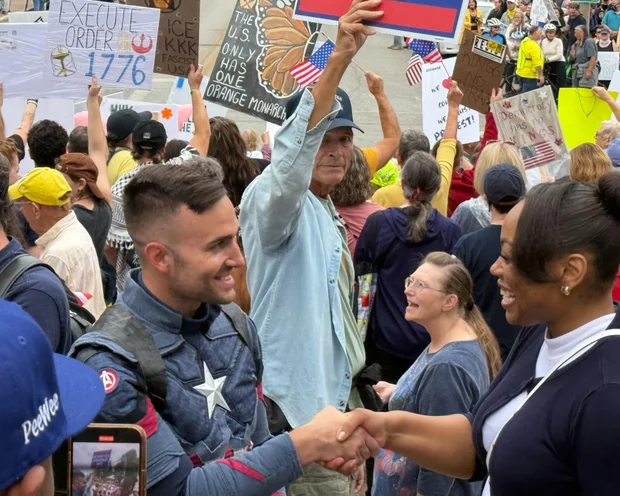
Illinois National Guard Members Defy Orders: “I Won’t Turn Against My Neighbors”
Chicago — Two Illinois National Guard members have publicly declared they will refuse to comply with federal orders to deploy as part of President Donald Trump’s controversial immigration enforcement operation in Chicago. Staff Sgt. Demi Palecek and Capt. Dylan Blaha, both serving in the Illinois National Guard and running for Congress in the same district, voiced their strong opposition to being used to police their own communities.
“It’s disheartening to be forced to go against your community members and your neighbors,” said Palecek, a Latina guardswoman and candidate for the Illinois 13th District. “It feels illegal. This is not what we signed up to do.”
Both guardsmen criticized the deployment, which followed President Trump’s federalization of 500 National Guard troops from Illinois and Texas to support immigration facilities in the Chicago area. Blaha underscored the constitutional conflict involved, stating, “I signed up to defend the American people and protect the Constitution. When rights such as free speech, due process, and a free press are being dismantled, it’s really hard to be a soldier.”
The situation has stirred tension within the National Guard ranks, with concerns about the moral and legal implications of orders that pit soldiers against their local neighbors. Refusing federal orders can lead to court-martial or other military penalties, yet Palecek and Blaha remain resolute in their stance.

This controversy unfolds amid ongoing legal battles. A federal judge in Chicago issued a temporary injunction blocking the full deployment of Guard troops to Chicago, citing concerns that military presence would “add fuel to the fire” amid protests and unrest. Illinois state officials, including Governor JB Pritzker, have opposed the deployment, filing lawsuits to prevent the federal takeover of state troops.
The National Guard’s presence remains in limbo, with troops engaged in planning and training but barred from operational deployment within Chicago while courts continue to examine the legal justifications presented by the Trump administration. The conflict highlights a broader constitutional debate over federal authority versus state control of the National Guard and the appropriate role of military forces in domestic law enforcement.
The deployment also raises questions about the ethics of using military personnel to enforce immigration laws, with many guardsmen voicing unease about participating in what they view as politically motivated actions against their own communities.
As legal and political battles continue, Illinois National Guard members like Palecek and Blaha stand firm, refusing to turn against their neighbors in a deeply divided moment for the state and the nation.